
Introduction — define the topic and why it matters
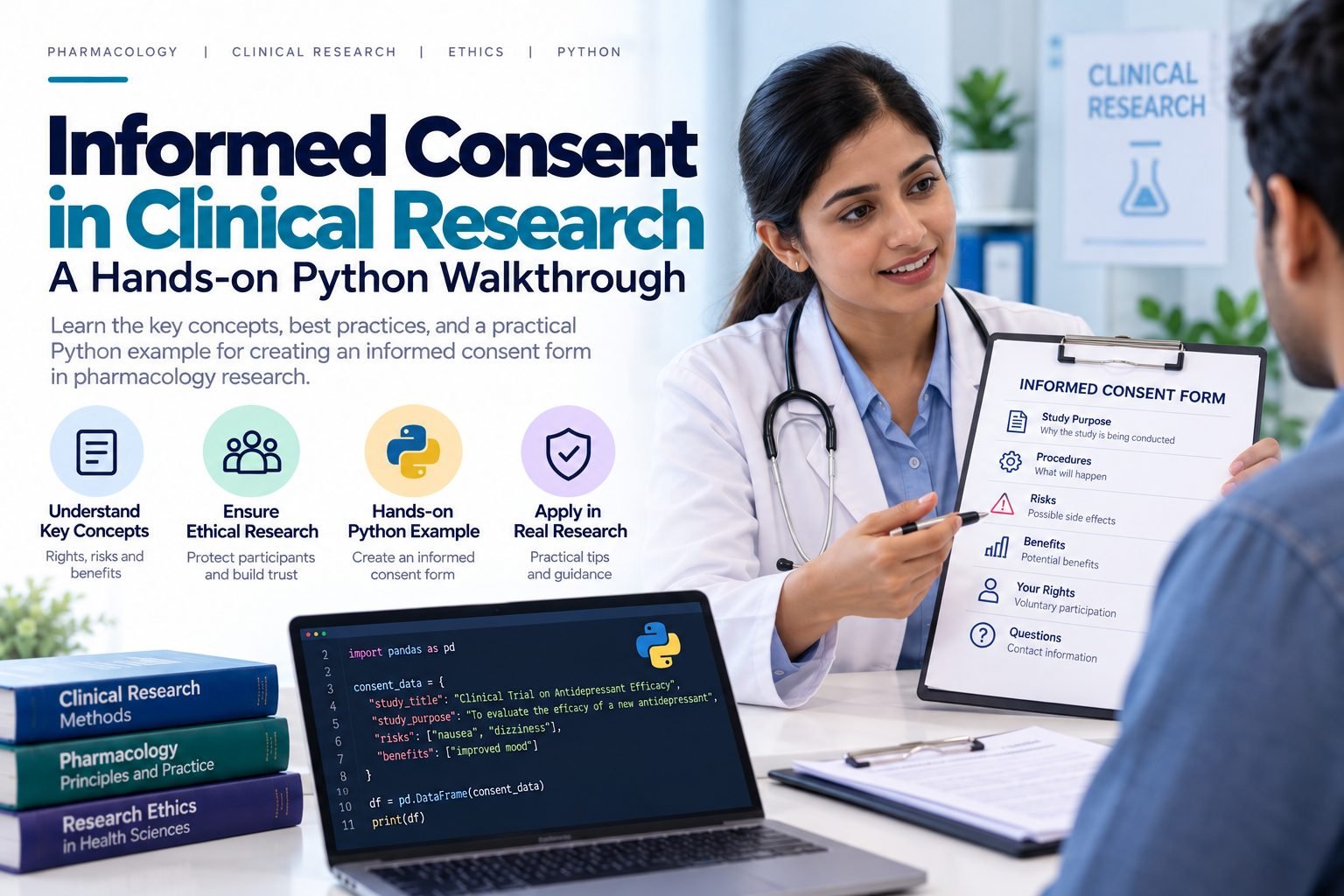
Informed consent is a crucial aspect of clinical research, ensuring that participants understand the risks and benefits of a study. In pharmacology research, informed consent is essential to ensure that participants are aware of the potential side effects of new drugs or treatments. This article will provide a comprehensive overview of informed consent in clinical research, with a focus on pharmacology researchers and a hands-on Python walkthrough.
What it is / what it isn't
Informed consent is the process by which a participant provides their consent to participate in a clinical study after being fully informed about the study's purpose, risks, and benefits. It is not a one-time event, but rather an ongoing process throughout the study. Informed consent is not the same as a participant's signature on a consent form; it requires a thorough understanding of the study and its implications.
Why it matters for the target audience
Pharmacology researchers must ensure that informed consent is obtained from participants to maintain the integrity of their research and to protect the rights and welfare of participants. Informed consent is also essential for building trust between researchers and participants, which is critical for the success of clinical studies. For example, in a study on the efficacy of a new drug, informed consent would involve explaining the potential side effects and benefits of the drug to participants.
Key components or steps
The key components of informed consent include: (1) disclosure of information, (2) comprehension of information, (3) voluntariness, and (4) capacity to consent. Disclosure of information involves providing participants with clear and concise information about the study, including its purpose, risks, and benefits. Comprehension of information involves ensuring that participants understand the information provided. Voluntariness involves ensuring that participants are not coerced or pressured into participating. Capacity to consent involves ensuring that participants have the cognitive ability to make informed decisions.
How it works in practice — a concrete example
For example, in a clinical trial on the efficacy of a new antidepressant, informed consent would involve explaining the potential side effects, such as nausea or dizziness, and the benefits, such as improved mood. The researcher would also need to ensure that participants understand the study's purpose and procedures, and that they are not coerced or pressured into participating. The following Python code demonstrates how to create a simple informed consent form:
import pandas as pd

# Define the informed consent form
informed_consent_form = {
    'study_title': 'Clinical Trial on Antidepressant Efficacy',
    'study_purpose': 'To evaluate the efficacy of a new antidepressant',
    'risks': ['nausea', 'dizziness'],
    'benefits': ['improved mood']
}

# Create a pandas dataframe from the informed consent form
df = pd.DataFrame(informed_consent_form)

# Print the informed consent form
print(df)
Common challenges
Common challenges in obtaining informed consent include: (1) ensuring that participants understand complex medical information, (2) addressing cultural or linguistic barriers, and (3) maintaining participant engagement throughout the study. For example, in a study on the efficacy of a new vaccine, participants may not fully understand the potential risks and benefits, requiring researchers to provide additional education and support.
Best practices
Best practices for obtaining informed consent include: (1) using clear and concise language, (2) providing opportunities for participants to ask questions, and (3) ensuring that participants have sufficient time to consider their decision. For example, in a clinical trial on the efficacy of a new cancer treatment, researchers should provide participants with a detailed explanation of the potential side effects and benefits, and allow them to ask questions and seek additional information before making a decision.
Common misconceptions
Common misconceptions about informed consent include: (1) that it is a one-time event, (2) that it is only necessary for clinical trials, and (3) that it is not necessary for minimal-risk studies. However, informed consent is an ongoing process that is necessary for all clinical research, regardless of the level of risk or the type of study.
FAQ — 5 questions readers commonly ask, with detailed answers
- Q: What is informed consent? A: Informed consent is the process by which a participant provides their consent to participate in a clinical study after being fully informed about the study's purpose, risks, and benefits.
- Q: Why is informed consent necessary? A: Informed consent is necessary to ensure that participants are aware of the potential risks and benefits of a study and to maintain the integrity of the research.
- Q: How is informed consent obtained? A: Informed consent is obtained through a process of disclosure, comprehension, voluntariness, and capacity to consent.
- Q: What are the key components of informed consent? A: The key components of informed consent include disclosure of information, comprehension of information, voluntariness, and capacity to consent.
- Q: How can researchers ensure that informed consent is obtained? A: Researchers can ensure that informed consent is obtained by using clear and concise language, providing opportunities for participants to ask questions, and ensuring that participants have sufficient time to consider their decision.
Conclusion
In conclusion, informed consent is a critical aspect of clinical research, ensuring that participants understand the risks and benefits of a study. Pharmacology researchers must ensure that informed consent is obtained from participants to maintain the integrity of their research and to protect the rights and welfare of participants. By following best practices and addressing common challenges, researchers can ensure that informed consent is obtained and that participants are fully informed about the study.