
Introduction
The European Medicines Agency (EMA) plays a crucial role in ensuring the safety and efficacy of medicines in the European Union. As a regulatory affairs professional in the pharmacy industry, understanding EMA regulatory pathways is essential for bringing new medicines to market. In this article, we will delve into the world of EMA regulatory pathways, exploring the key components, steps, and challenges involved in the process. We will also provide hands-on Python code examples to illustrate the concepts.
What it is / what it isn't
EMA regulatory pathways refer to the procedures and guidelines set by the EMA for the authorization and supervision of medicines in the EU. It is not a single, straightforward process, but rather a complex network of pathways that vary depending on the type of medicine, its intended use, and the level of risk associated with it. For example, the centralized procedure is used for medicines that are considered high-risk or innovative, while the decentralized procedure is used for medicines that are considered low-risk.
Why it matters for the target audience
Regulatory affairs professionals in the pharmacy industry need to understand EMA regulatory pathways to ensure that their products meet the required standards and are authorized for use in the EU. This knowledge is critical for pharmaceutical companies, as it can impact their ability to bring new medicines to market and ultimately affect their bottom line. For instance, a company that fails to navigate the regulatory pathways correctly may face delays or even rejection of their marketing authorization application.
Key components or steps
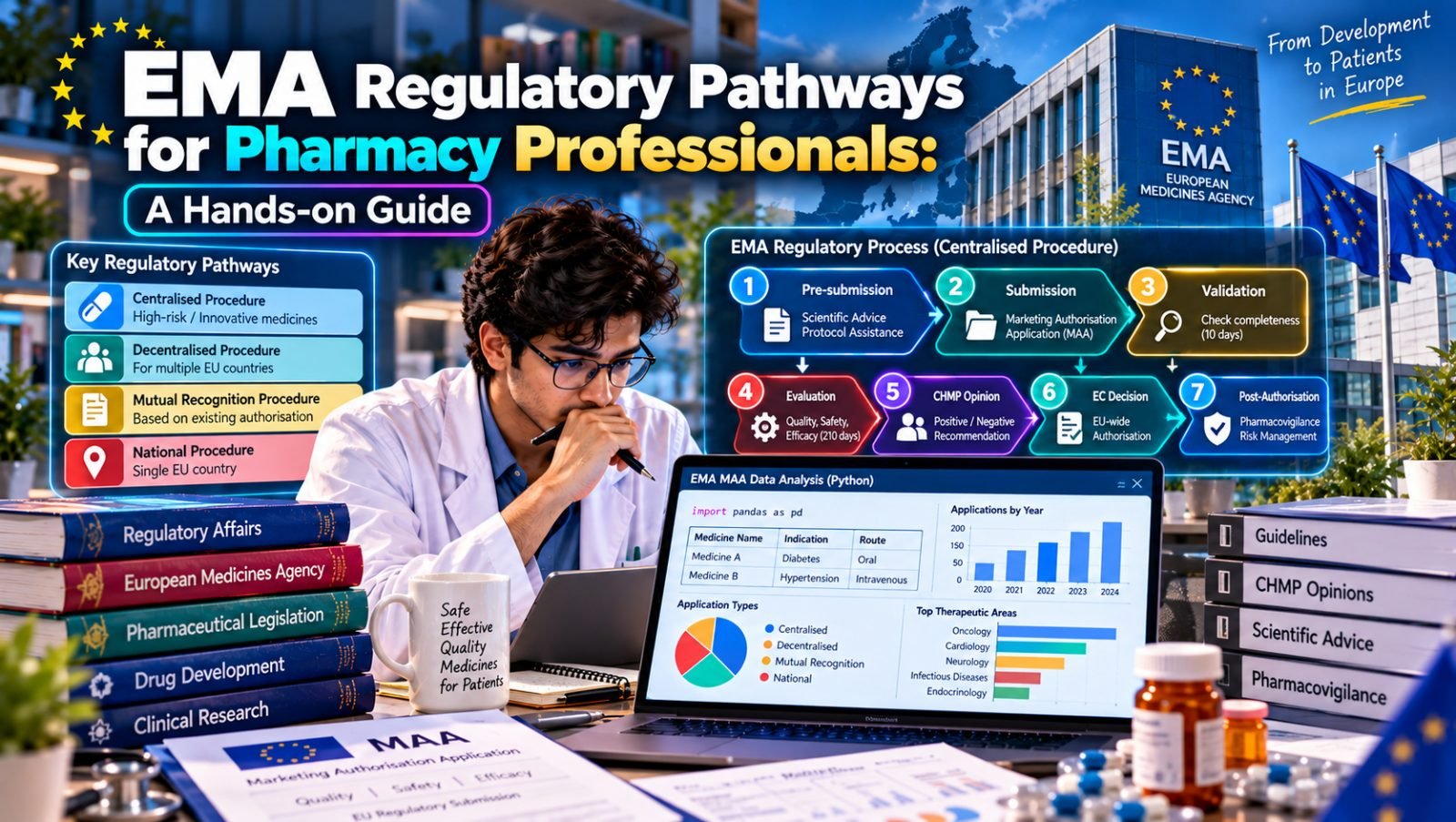
The EMA regulatory pathways involve several key components and steps, including:
- Pre-submission activities, such as protocol assistance and scientific advice
- Submission of the marketing authorization application (MAA)
- Validation and evaluation of the MAA
- Authorization and post-authorization activities, such as pharmacovigilance and risk management
Each of these steps requires careful planning and execution to ensure that the regulatory requirements are met. For example, the MAA must include detailed information on the medicine's quality, safety, and efficacy, as well as its packaging and labeling.
How it works in practice — a concrete example
Let's consider an example of a pharmaceutical company that wants to bring a new medicine to market in the EU. The company would first need to determine which regulatory pathway to follow, based on the medicine's characteristics and intended use. If the medicine is considered high-risk, the company would need to follow the centralized procedure, which involves submitting an MAA to the EMA. The EMA would then evaluate the MAA and provide a decision on whether to authorize the medicine for use in the EU.
import pandas as pd

# Create a sample dataset for the MAA
maa_data = pd.DataFrame({
    'Medicine Name': ['Medicine A', 'Medicine B'],
    'Indication': ['Treatment of diabetes', 'Treatment of hypertension'],
    'Route of Administration': ['Oral', 'Intravenous']
})

# Print the sample dataset
print(maa_data)
This code example illustrates how to create a sample dataset for the MAA, which would include information on the medicine's name, indication, and route of administration.
Common challenges
Regulatory affairs professionals in the pharmacy industry often face several challenges when navigating EMA regulatory pathways, including:
- Complexity of the regulatory requirements
- Uncertainty and ambiguity in the guidance documents
- Tight deadlines and resource constraints
For example, the EMA's guidance documents may not always provide clear and concise information on the regulatory requirements, leading to confusion and uncertainty for pharmaceutical companies.
Best practices
To overcome these challenges, regulatory affairs professionals can follow best practices such as:
- Staying up-to-date with the latest regulatory developments and guidance documents
- Seeking advice from experienced regulatory professionals
- Using project management tools to track and manage the regulatory process
For instance, pharmaceutical companies can use project management tools to track the progress of their MAA and ensure that all the necessary documents and information are submitted on time.
Common misconceptions
There are several common misconceptions about EMA regulatory pathways, including:
- The idea that the centralized procedure is only used for innovative medicines
- The notion that the decentralized procedure is faster and more efficient than the centralized procedure
However, these misconceptions can lead to confusion and mistakes, and it is essential to understand the actual regulatory requirements and procedures.
FAQ — 5 questions readers commonly ask, with detailed answers
Here are five questions that readers commonly ask about EMA regulatory pathways, along with detailed answers:
- Q: What is the difference between the centralized and decentralized procedures? A: The centralized procedure is used for medicines that are considered high-risk or innovative, while the decentralized procedure is used for medicines that are considered low-risk.
- Q: How long does the regulatory process typically take? A: The length of the regulatory process can vary depending on the complexity of the application and the type of procedure followed. However, the average time to authorization is around 12-18 months.
- Q: What is the role of the EMA in the regulatory process? A: The EMA is responsible for evaluating the marketing authorization application and providing a decision on whether to authorize the medicine for use in the EU.
- Q: Can pharmaceutical companies appeal a negative decision from the EMA? A: Yes, pharmaceutical companies can appeal a negative decision from the EMA, but this must be done within a specified timeframe and with sufficient justification.
- Q: How do regulatory affairs professionals stay up-to-date with the latest regulatory developments? A: Regulatory affairs professionals can stay up-to-date with the latest regulatory developments by attending conferences and workshops, reading industry publications, and participating in online forums and discussion groups.
Conclusion
In conclusion, EMA regulatory pathways are complex and multifaceted, requiring careful planning and execution to ensure that pharmaceutical companies meet the required standards and are authorized to bring their products to market. By understanding the key components and steps involved in the regulatory process, regulatory affairs professionals can navigate the challenges and uncertainties of the EMA regulatory pathways and ensure that their products are safe and effective for use in the EU.