
Introduction — Define the Topic and Why it Matters
Explainable AI in clinical decision support is crucial for pharmacy students, as it enhances patient care and ensures transparency in AI-driven decisions. The increasing use of artificial intelligence (AI) in healthcare necessitates a clear understanding of how AI algorithms arrive at their conclusions, especially when it comes to patient outcomes. A study by Rajkomar et al. (2019) highlights the importance of explainability in clinical AI, emphasizing its role in building trust between healthcare providers and patients.What it is / What it isn't
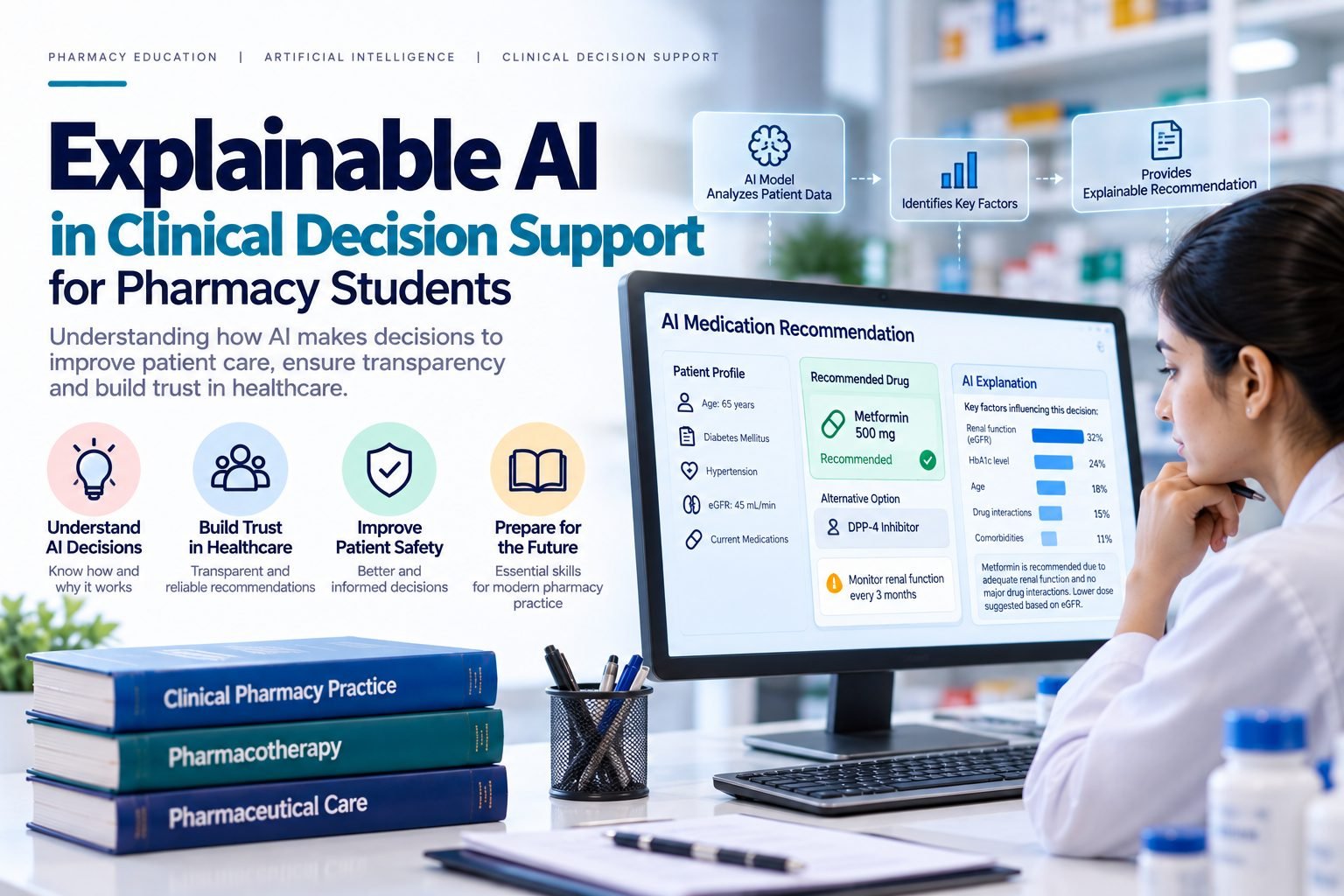
Explainable AI refers to techniques and methods used to make AI decisions transparent and understandable. It is not just about making AI more accurate but about providing insights into how AI models work, which is critical in clinical settings where patient lives are at stake. For instance, in a clinical decision support system for medication management, explainable AI can help pharmacists understand why a particular medication was recommended over another, based on patient-specific factors.Why it Matters for the Target Audience
For pharmacy students, understanding explainable AI is essential for several reasons. Firstly, it equips them with the knowledge to critically evaluate AI-driven recommendations, ensuring they can make informed decisions that prioritize patient safety and outcomes. Secondly, it prepares them for a future where AI will be an integral part of clinical practice, requiring professionals who can both use and interpret AI tools effectively. A concrete example is the use of AI in predicting patient adherence to medication regimens, where explainable models can provide insights into the factors influencing adherence, thereby guiding targeted interventions.Key Components or Steps
The key components of explainable AI in clinical decision support include model interpretability, feature attribution, and model explainability. Model interpretability involves understanding how the model works, while feature attribution focuses on identifying which input features are most influential in the model's predictions. Model explainability, on the other hand, seeks to provide insights into the model's decision-making process. For pharmacy students, grasping these concepts is vital for effectively integrating AI into their practice. For instance, understanding how an AI model weighs different clinical factors to predict drug interactions can help pharmacists anticipate and prevent potential adverse events.How it Works in Practice — A Concrete Example
A practical example of explainable AI in action is in the development of clinical decision support systems for personalized medicine. These systems use patient data, including genetic information, medical history, and current health status, to recommend tailored treatment plans. Explainable AI can provide insights into how these recommendations are made, for example, by highlighting which genetic markers or aspects of the patient's medical history were most influential in the decision-making process. This transparency not only helps in building trust but also allows healthcare professionals, including pharmacists, to refine and improve treatment strategies based on patient-specific factors.Common Challenges
Despite its importance, implementing explainable AI in clinical decision support faces several challenges. One of the primary challenges is the complexity of many AI models, which can make interpretability difficult. Additionally, there is a trade-off between model accuracy and interpretability, with more complex models often being more accurate but less interpretable. Another challenge is the lack of standardization in explainability techniques, which can make it difficult to compare and contrast different models. Pharmacy students need to be aware of these challenges and how they can be addressed through ongoing research and development in the field.Best Practices
Best practices for implementing explainable AI in clinical decision support include selecting models that balance accuracy and interpretability, regularly auditing AI systems for bias and errors, and providing clear explanations of AI-driven recommendations to healthcare professionals and patients. It's also crucial to involve multidisciplinary teams, including pharmacists, in the development and validation of AI models to ensure they meet clinical needs and standards. Furthermore, incorporating explainability into the design of AI systems from the outset, rather than as an afterthought, can significantly enhance their utility and trustworthiness in clinical settings.Common Misconceptions
One common misconception about explainable AI is that it necessarily compromises model performance. While it's true that some interpretability techniques may reduce model accuracy, this is not universally the case, and many methods can provide significant insights without sacrificing performance. Another misconception is that explainability is only relevant for regulatory or legal purposes, when in fact, it has direct implications for patient care and outcomes. Pharmacy students should be aware of these misconceptions and understand the true value and potential of explainable AI in enhancing patient care.FAQ — 5 Questions Readers Commonly Ask, with Detailed Answers
- What is the role of explainable AI in patient outcomes? Explainable AI plays a critical role in patient outcomes by providing healthcare professionals with insights into how AI-driven decisions are made, thereby enabling more informed and personalized care.
- How does explainable AI enhance transparency in clinical decision-making? Explainable AI enhances transparency by providing clear explanations of the factors that influence AI-driven recommendations, which helps build trust between healthcare providers and patients.
- What are the key challenges in implementing explainable AI in clinical settings? Key challenges include the complexity of AI models, the trade-off between model accuracy and interpretability, and the lack of standardization in explainability techniques.
- How can pharmacy students contribute to the development of explainable AI in clinical decision support? Pharmacy students can contribute by participating in research projects, collaborating with multidisciplinary teams, and advocating for the integration of explainable AI into clinical practice.
- What is the future outlook for explainable AI in pharmacy practice? The future outlook is promising, with explainable AI expected to play an increasingly important role in enhancing patient care, improving treatment outcomes, and building trust in AI-driven clinical decision support systems.