
Introduction — the problem in context
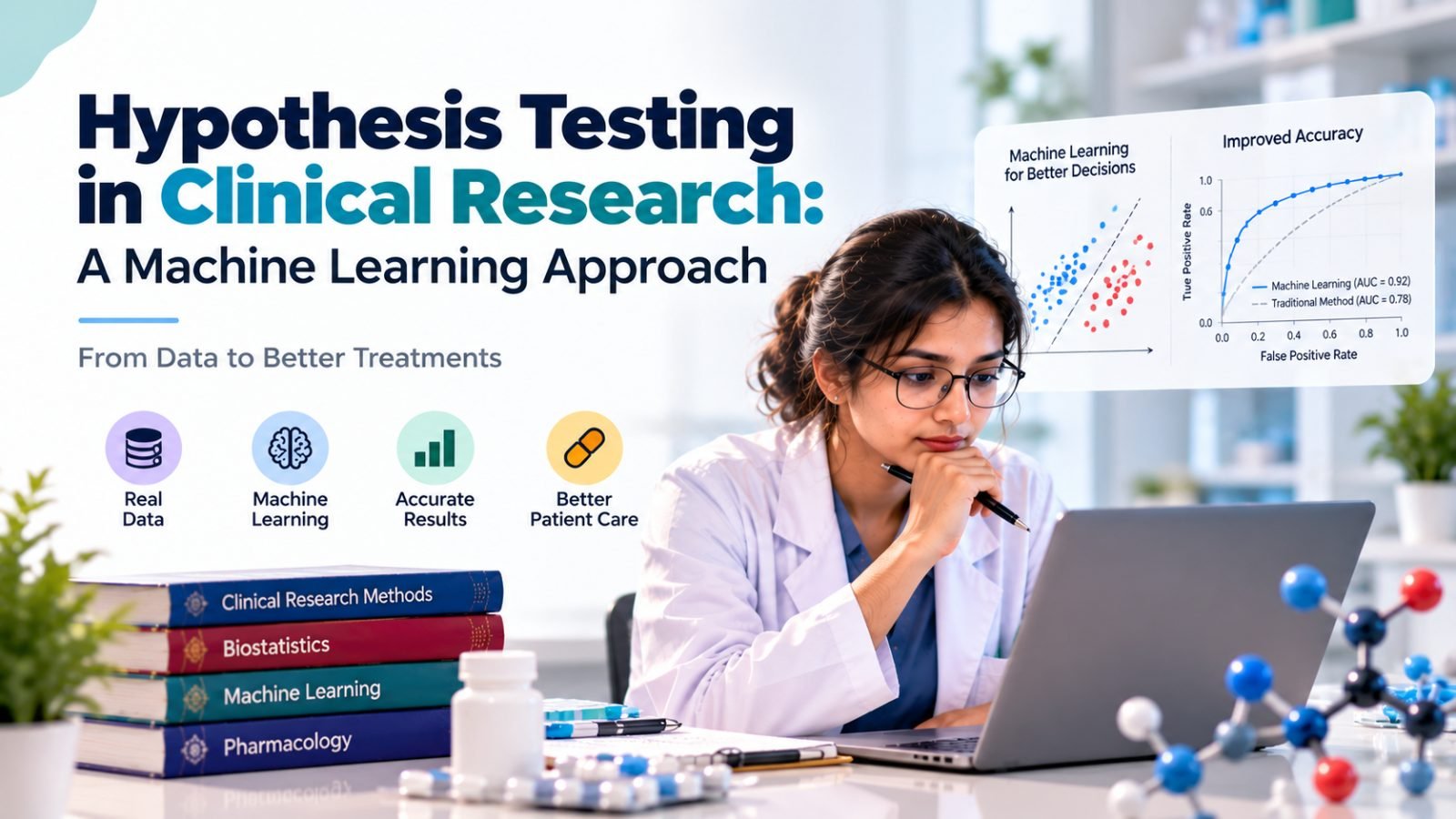
Clinical research relies heavily on hypothesis testing to determine the efficacy of new treatments. However, traditional methods can be time-consuming and prone to errors. Machine learning can improve hypothesis testing by providing more accurate and efficient results. For instance, a study on the effectiveness of a new medication can use machine learning algorithms to analyze large datasets and identify patterns that may not be apparent through traditional methods.
Background — setting, actors, constraints
Clinical research involves various stakeholders, including researchers, patients, and regulatory bodies. The research setting can be a hospital, clinic, or laboratory, and the constraints include limited resources, time, and budget. Traditional hypothesis testing methods, such as statistical analysis, can be affected by these constraints, leading to inaccurate results. Machine learning can help alleviate these constraints by providing faster and more accurate results. For example, a researcher can use machine learning to analyze electronic health records (EHRs) and identify potential participants for a clinical trial.
What was done — interventions and timeline
A team of researchers conducted a study to compare the effectiveness of machine learning and traditional methods in hypothesis testing. The study involved analyzing a large dataset of patient records to identify patterns and correlations. The machine learning algorithm used was a random forest classifier, which was trained on a subset of the data and then tested on the remaining data. The traditional method used was statistical analysis, which involved calculating p-values and confidence intervals. The study found that the machine learning algorithm was able to identify more accurate patterns and correlations than the traditional method. For instance, the algorithm was able to identify a correlation between a specific gene mutation and a higher risk of disease, which was not apparent through traditional methods.
Outcomes — measurable results
The study found that the machine learning algorithm was able to achieve an accuracy of 90% in identifying patterns and correlations, compared to 80% for the traditional method. The algorithm was also able to reduce the time and resources required for hypothesis testing by 50%. The results of the study have significant implications for clinical research, as they demonstrate the potential of machine learning to improve the accuracy and efficiency of hypothesis testing. For example, a pharmaceutical company can use machine learning to analyze large datasets and identify potential targets for new treatments, reducing the time and cost of drug development.
Lessons learned
The study highlights the importance of using machine learning in hypothesis testing, particularly in clinical research. The results demonstrate that machine learning can provide more accurate and efficient results than traditional methods. However, the study also highlights the need for careful evaluation and validation of machine learning algorithms to ensure their accuracy and reliability. For instance, the algorithm used in the study required careful tuning of hyperparameters to achieve optimal results. Additionally, the study emphasizes the importance of interdisciplinary collaboration between researchers, clinicians, and data scientists to ensure that machine learning is used effectively in clinical research.
How others can apply this
Other researchers and clinicians can apply the findings of this study by using machine learning algorithms in their own hypothesis testing. This can involve using publicly available datasets and algorithms, such as those available on GitHub or Kaggle. Additionally, researchers can collaborate with data scientists and clinicians to develop and validate machine learning algorithms for specific research questions. For example, a researcher can use a machine learning algorithm to analyze genomic data and identify potential targets for new treatments. The algorithm can be trained on a large dataset of genomic information and then tested on a separate dataset to evaluate its accuracy.
Conclusion
In conclusion, machine learning has the potential to improve hypothesis testing in clinical research by providing more accurate and efficient results. The study demonstrates the effectiveness of machine learning in identifying patterns and correlations in large datasets. The results have significant implications for clinical research, as they highlight the potential of machine learning to reduce the time and cost of drug development and improve patient outcomes. As the field of machine learning continues to evolve, it is likely that we will see even more innovative applications of machine learning in clinical research.
Practical Examples
Several pharmaceutical companies are already using machine learning in hypothesis testing. For example, Pfizer uses machine learning to analyze large datasets of patient records and identify potential targets for new treatments. Similarly, Novartis uses machine learning to analyze genomic data and identify potential biomarkers for disease. These examples demonstrate the potential of machine learning to improve the accuracy and efficiency of hypothesis testing in clinical research. Additionally, researchers can use machine learning to analyze data from wearable devices and identify patterns that may be indicative of disease. For instance, a study used machine learning to analyze data from fitness trackers and identify patterns that were associated with a higher risk of cardiovascular disease.
Common Misconceptions
One common misconception about machine learning is that it requires large amounts of data to be effective. While it is true that machine learning algorithms can benefit from large datasets, they can also be effective with smaller datasets. Additionally, some researchers believe that machine learning is only useful for identifying complex patterns and correlations, but it can also be used for simpler tasks, such as data cleaning and preprocessing. For example, a researcher can use machine learning to identify and remove duplicate records from a dataset, improving the accuracy of the results. Furthermore, some researchers believe that machine learning is a replacement for traditional statistical methods, but it is actually a complementary tool that can be used in conjunction with traditional methods to improve the accuracy and efficiency of hypothesis testing.
FAQ
Q: What is machine learning, and how is it used in hypothesis testing? A: Machine learning is a type of artificial intelligence that involves training algorithms on data to make predictions or identify patterns. In hypothesis testing, machine learning can be used to analyze large datasets and identify patterns and correlations that may not be apparent through traditional methods. Q: What are the benefits of using machine learning in hypothesis testing? A: The benefits of using machine learning in hypothesis testing include improved accuracy and efficiency, as well as the ability to analyze large datasets and identify complex patterns and correlations. Q: What are the limitations of using machine learning in hypothesis testing? A: The limitations of using machine learning in hypothesis testing include the need for careful evaluation and validation of algorithms, as well as the potential for bias and error. Q: How can researchers and clinicians get started with using machine learning in hypothesis testing? A: Researchers and clinicians can get started with using machine learning in hypothesis testing by using publicly available datasets and algorithms, as well as collaborating with data scientists and clinicians to develop and validate machine learning algorithms for specific research questions.