
Hook — Frame the Question
What if you could create a system that provides accurate and up-to-date drug information to patients and healthcare professionals? With the help of Python programming, you can build a drug information service that meets the needs of the pharmaceutical industry.
The Short Answer
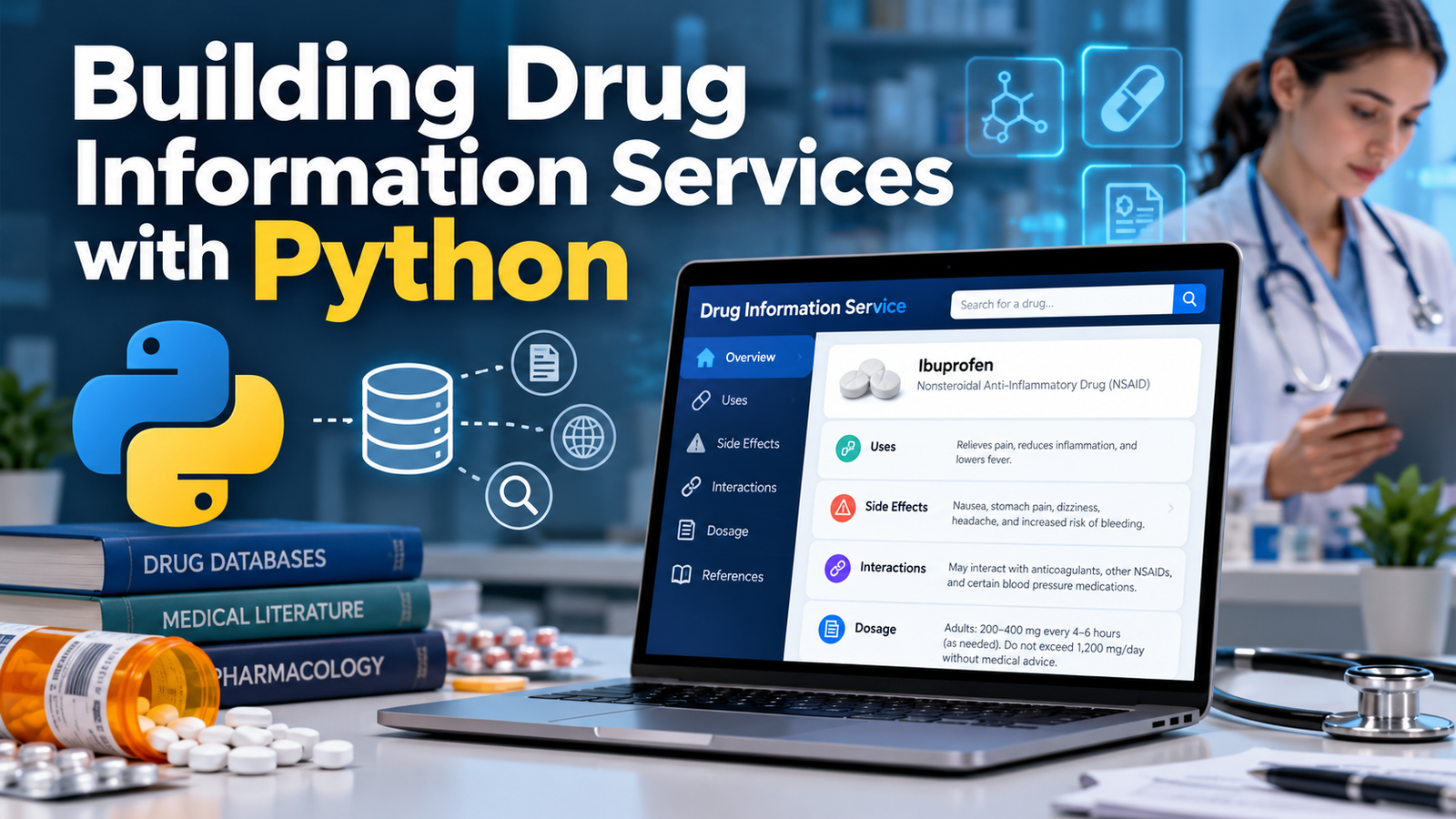
A drug information service is a system that provides information on drugs, including their uses, side effects, and interactions. With Python, you can build a service that retrieves and analyzes data from various sources, such as drug databases and medical literature.
The Long Answer
Introduction to Drug Information Services
A drug information service is an essential tool for healthcare professionals and patients. It provides information on drugs, including their uses, side effects, and interactions. With the help of Python, you can build a service that retrieves and analyzes data from various sources, such as drug databases and medical literature.
For example, you can use the python library rxpy to parse and analyze prescription data. The following code snippet demonstrates how to use rxpy to extract information from a prescription:
import rxpy

# Load prescription data
prescription = rxpy.load('prescription.json')

# Extract medication information
medication = prescription['medication']

# Print medication information
print(medication['name'])
print(medication['dosage'])
Building a Drug Information Service with Python
To build a drug information service with Python, you need to follow these steps:
- Define the scope and requirements of the service
- Choose the data sources and APIs to use
- Design and implement the database and data models
- Develop the user interface and API
- Test and deploy the service
For example, you can use the python library flask to build a web API for your drug information service. The following code snippet demonstrates how to use flask to create a simple API:
from flask import Flask, jsonify

app = Flask(__name__)

# Define a route for the API
@app.route('/drugs', methods=['GET'])
def get_drugs():
    # Retrieve drug information from the database
    drugs = Drug.query.all()

    # Return the drug information as JSON
    return jsonify([drug.to_dict() for drug in drugs])

if __name__ == '__main__':
    app.run(debug=True)
Integrating with External Data Sources
To provide accurate and up-to-date information, your drug information service needs to integrate with external data sources, such as drug databases and medical literature. You can use APIs and web scraping techniques to retrieve data from these sources.
For example, you can use the python library beautifulsoup4 to scrape data from a medical website. The following code snippet demonstrates how to use beautifulsoup4 to extract information from a web page:
from bs4 import BeautifulSoup
import requests

# Send a request to the website
response = requests.get('https://www.example.com')

# Parse the HTML content
soup = BeautifulSoup(response.content, 'html.parser')

# Extract the information
information = soup.find('div', {'class': 'information'})

# Print the information
print(information.text)
Security and Authentication
To ensure the security and integrity of your drug information service, you need to implement authentication and authorization mechanisms. You can use libraries such as flask-security and pyjwt to handle authentication and authorization.
For example, you can use the python library flask-security to implement authentication and authorization for your API. The following code snippet demonstrates how to use flask-security to protect a route:
from flask_security import Security, SQLAlchemyUserDatastore, UserMixin, RoleMixin

# Define the user and role models
class User(UserMixin, db.Model):
    id = db.Column(db.Integer, primary_key=True)
    email = db.Column(db.String(255), unique=True)
    password = db.Column(db.String(255))

class Role(RoleMixin, db.Model):
    id = db.Column(db.Integer, primary_key=True)
    name = db.Column(db.String(255), unique=True)

# Create the user data store
user_datastore = SQLAlchemyUserDatastore(db, User, Role)

# Create the security extension
security = Security(app, user_datastore)

# Define a route that requires authentication
@app.route('/protected', methods=['GET'])
@security.login_required
def protected():
    return 'Hello, authenticated user!'
Common Misconceptions
There are several common misconceptions about building a drug information service with Python. One of the most common misconceptions is that it is too difficult or complex. However, with the right guidance and resources, you can build a robust and reliable service.
Another common misconception is that you need to be an expert in programming or pharmacology to build a drug information service. However, you can use libraries and frameworks to simplify the development process and make it more accessible to non-experts.
Practical Implications
The practical implications of building a drug information service with Python are significant. You can provide accurate and up-to-date information to patients and healthcare professionals, which can improve patient outcomes and reduce medication errors.
Additionally, you can use your service to analyze and visualize data, which can help you identify trends and patterns in medication use and adverse reactions. This can inform decision-making and policy development in the pharmaceutical industry.
FAQ
- What is a drug information service? A drug information service is a system that provides information on drugs, including their uses, side effects, and interactions.
- What programming languages can I use to build a drug information service? You can use programming languages such as Python, Java, and JavaScript to build a drug information service.
- What libraries and frameworks can I use to build a drug information service? You can use libraries and frameworks such as
rxpy,flask, andbeautifulsoup4to build a drug information service. - How can I ensure the security and integrity of my drug information service? You can implement authentication and authorization mechanisms, such as
flask-securityandpyjwt, to ensure the security and integrity of your service. - What are the practical implications of building a drug information service with Python? The practical implications of building a drug information service with Python are significant, including providing accurate and up-to-date information to patients and healthcare professionals, analyzing and visualizing data, and informing decision-making and policy development in the pharmaceutical industry.
Conclusion
In conclusion, building a drug information service with Python is a complex but rewarding task. With the right guidance and resources, you can create a robust and reliable service that provides accurate and up-to-date information to patients and healthcare professionals. By following the steps outlined in this article and using the libraries and frameworks mentioned, you can build a service that meets the needs of the pharmaceutical industry and improves patient outcomes.