
Introduction
Quality control is a critical aspect of pharma manufacturing, ensuring that pharmaceutical products meet the required standards of safety, efficacy, and quality. In this article, we will delve into the world of quality control, exploring its importance, key components, and common challenges. We will also discuss best practices and provide sample exam-style questions to help research scholars in pharmaceutical sciences prepare for their exams.
What it is / what it isn't
Quality control in pharma manufacturing refers to the processes and procedures used to ensure that pharmaceutical products are manufactured, tested, and released to the market in a controlled and consistent manner. It involves a range of activities, including testing, inspection, and validation, to ensure that products meet the required standards. Quality control is not just about testing products, but also about ensuring that the manufacturing process itself is controlled and consistent.
For example, a pharmaceutical company may implement a quality control process to ensure that its manufacturing equipment is properly calibrated and maintained. This could involve regular testing and validation of the equipment, as well as training for staff on how to use it correctly.
Why it matters for the target audience
For research scholars in pharmaceutical sciences, understanding quality control in pharma manufacturing is crucial for several reasons. Firstly, it is essential for ensuring the safety and efficacy of pharmaceutical products. Secondly, it is a critical aspect of regulatory compliance, with regulatory agencies such as the FDA requiring pharmaceutical companies to demonstrate that their products are manufactured in accordance with good manufacturing practice (GMP) guidelines. Finally, quality control is essential for maintaining public trust in the pharmaceutical industry, with companies that fail to meet quality standards risking damage to their reputation and financial losses.
For instance, a research scholar may be involved in the development of a new pharmaceutical product, and understanding quality control processes will help them to ensure that the product is manufactured and tested in a controlled and consistent manner.
Key components or steps
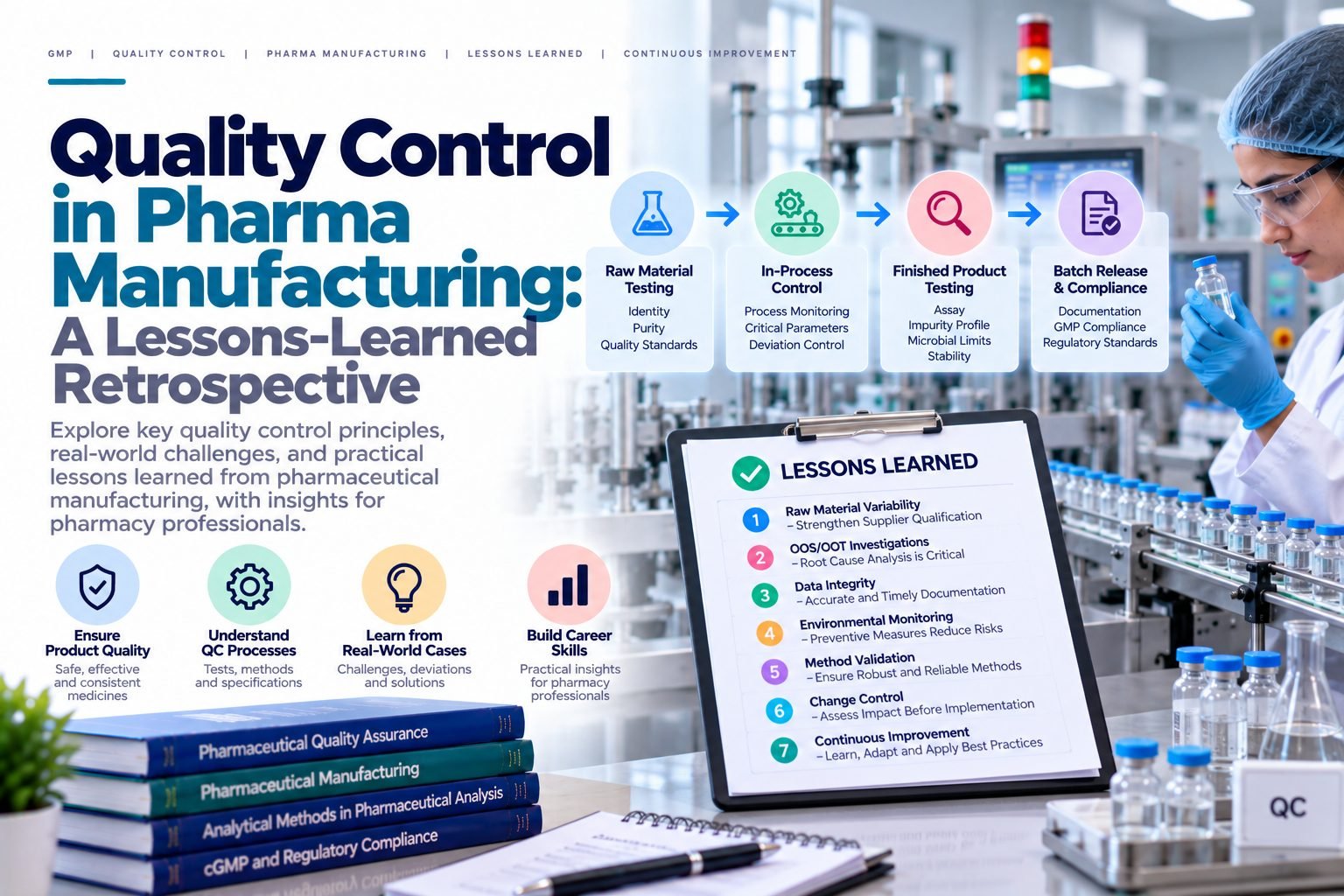
The key components of quality control in pharma manufacturing include testing, inspection, and validation. Testing involves evaluating the quality of pharmaceutical products, while inspection involves examining the manufacturing process and equipment to ensure that it is controlled and consistent. Validation involves verifying that the manufacturing process and equipment are operating as intended.
For example, a pharmaceutical company may implement a testing program to evaluate the purity and potency of its products. This could involve using techniques such as high-performance liquid chromatography (HPLC) or gas chromatography (GC) to analyze the chemical composition of the products.
How it works in practice — a concrete example
A concrete example of quality control in pharma manufacturing is the implementation of a quality control program for a pharmaceutical company that manufactures tablets. The program could involve testing the tablets for purity and potency, inspecting the manufacturing equipment to ensure that it is properly calibrated and maintained, and validating the manufacturing process to ensure that it is operating as intended.
For instance, the company may use a technique such as near-infrared spectroscopy (NIR) to test the tablets for purity and potency. This could involve using a NIR spectrometer to analyze the chemical composition of the tablets, and comparing the results to a set of predetermined standards.
Common challenges
Common challenges in quality control in pharma manufacturing include ensuring that the manufacturing process is controlled and consistent, maintaining regulatory compliance, and managing the costs of quality control. Additionally, pharmaceutical companies may face challenges in implementing new technologies and processes, such as automation and robotics, while ensuring that they meet the required standards of quality and safety.
For example, a pharmaceutical company may face challenges in implementing a new automated testing system, which requires significant investment in equipment and training for staff. The company must ensure that the system is properly validated and verified to ensure that it is operating as intended.
Best practices
Best practices in quality control in pharma manufacturing include implementing a quality control program that is tailored to the specific needs of the company, providing training for staff on quality control processes and procedures, and continuously monitoring and evaluating the effectiveness of the quality control program. Additionally, pharmaceutical companies should ensure that they are complying with regulatory requirements, such as GMP guidelines, and maintaining accurate and detailed records of quality control activities.
For instance, a pharmaceutical company may implement a quality control program that includes regular testing and inspection of products, as well as training for staff on how to use equipment and follow procedures correctly. The company should also continuously monitor and evaluate the effectiveness of the program, making adjustments as needed to ensure that it is operating as intended.
Common misconceptions
Common misconceptions about quality control in pharma manufacturing include the idea that quality control is only about testing products, rather than ensuring that the manufacturing process itself is controlled and consistent. Another misconception is that quality control is a one-time event, rather than an ongoing process that requires continuous monitoring and evaluation.
For example, some people may believe that quality control is only about testing the final product, rather than ensuring that the raw materials, equipment, and manufacturing process are all controlled and consistent. However, quality control is a much broader concept that encompasses all aspects of the manufacturing process.
FAQ — 5 questions readers commonly ask, with detailed answers
Q: What is the purpose of quality control in pharma manufacturing?
A: The purpose of quality control in pharma manufacturing is to ensure that pharmaceutical products are manufactured, tested, and released to the market in a controlled and consistent manner, meeting the required standards of safety, efficacy, and quality.
Q: What are the key components of quality control in pharma manufacturing?
A: The key components of quality control in pharma manufacturing include testing, inspection, and validation. Testing involves evaluating the quality of pharmaceutical products, while inspection involves examining the manufacturing process and equipment to ensure that it is controlled and consistent. Validation involves verifying that the manufacturing process and equipment are operating as intended.
Q: How does quality control work in practice?
A: Quality control works in practice by implementing a quality control program that is tailored to the specific needs of the company. This could involve testing products, inspecting equipment, and validating processes, as well as providing training for staff and continuously monitoring and evaluating the effectiveness of the quality control program.
Q: What are some common challenges in quality control in pharma manufacturing?
A: Common challenges in quality control in pharma manufacturing include ensuring that the manufacturing process is controlled and consistent, maintaining regulatory compliance, and managing the costs of quality control. Additionally, pharmaceutical companies may face challenges in implementing new technologies and processes, such as automation and robotics, while ensuring that they meet the required standards of quality and safety.
Q: What are some best practices in quality control in pharma manufacturing?
A: Best practices in quality control in pharma manufacturing include implementing a quality control program that is tailored to the specific needs of the company, providing training for staff on quality control processes and procedures, and continuously monitoring and evaluating the effectiveness of the quality control program. Additionally, pharmaceutical companies should ensure that they are complying with regulatory requirements, such as GMP guidelines, and maintaining accurate and detailed records of quality control activities.
Conclusion
In conclusion, quality control is a critical aspect of pharma manufacturing, ensuring that pharmaceutical products meet the required standards of safety, efficacy, and quality. By understanding the key components of quality control, including testing, inspection, and validation, and implementing best practices, such as providing training for staff and continuously monitoring and evaluating the effectiveness of the quality control program, pharmaceutical companies can ensure that their products are manufactured in a controlled and consistent manner. Additionally, by being aware of common challenges and misconceptions, pharmaceutical companies can take steps to address these issues and maintain high standards of quality control.