
Introduction
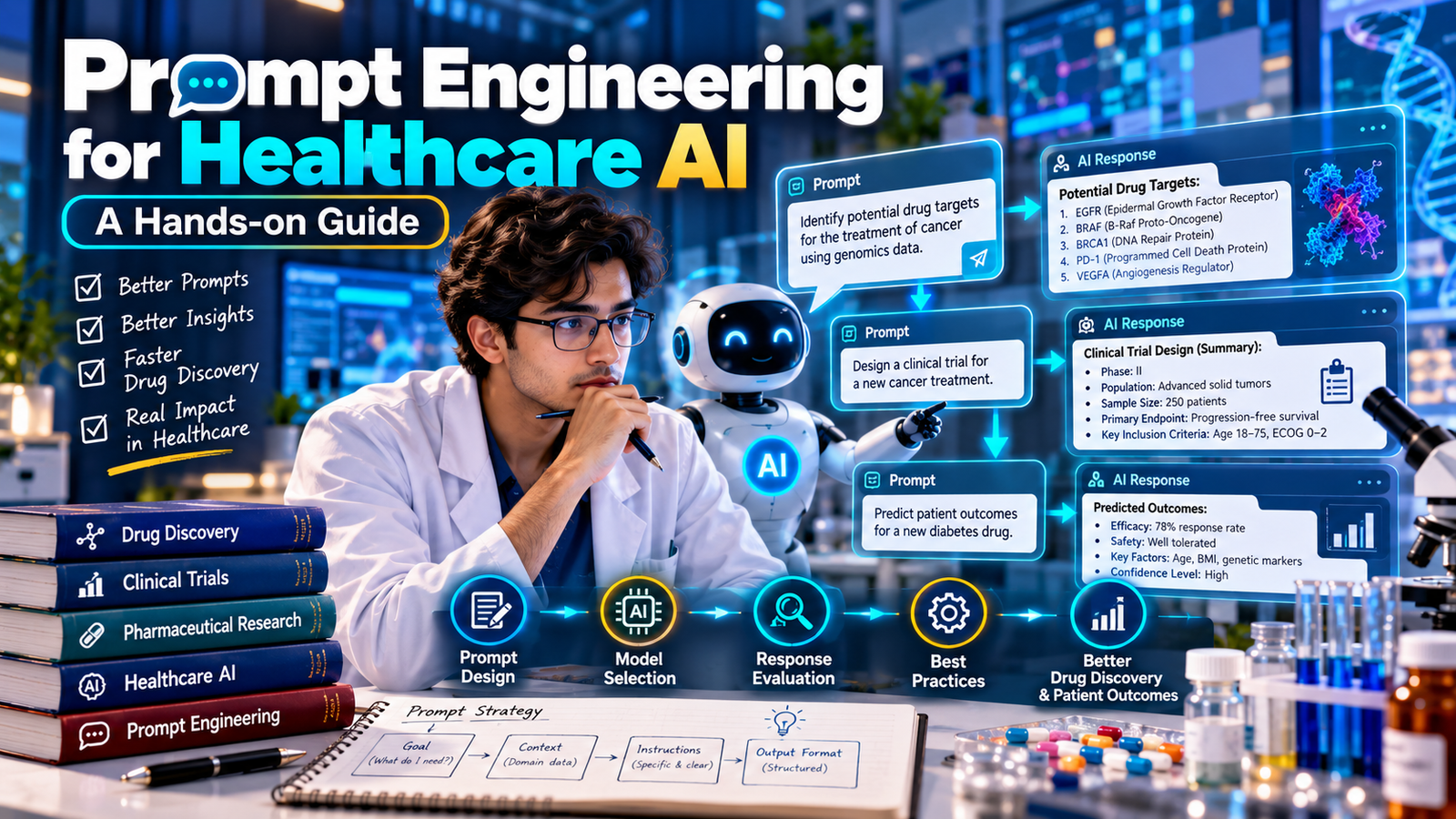
Prompt engineering is a crucial aspect of healthcare AI, enabling professionals to optimize AI models for specific tasks. By understanding prompt engineering, pharmaceutical industry professionals can improve AI-driven drug discovery and development. This guide provides a hands-on approach to prompt engineering, including key components, challenges, and best practices.
What it is / what it isn't
Prompt engineering refers to the process of designing and optimizing text prompts to elicit specific responses from AI models. It's not just about crafting well-written prompts, but also about understanding how AI models process language. For example, a well-designed prompt can help an AI model identify potential drug targets, while a poorly designed prompt may lead to irrelevant results.
Example: Prompt Engineering for Drug Target Identification
prompt = "Identify potential drug targets for the treatment of cancer"
ai_response = model.predict(prompt)
print(ai_response)
In this example, the prompt is designed to elicit a specific response from the AI model, which is to identify potential drug targets for cancer treatment.
Why it matters for the target audience
Pharmaceutical industry professionals can benefit from prompt engineering in several ways. By optimizing AI models, they can improve drug discovery and development, reduce costs, and enhance patient outcomes. For instance, prompt engineering can help identify potential drug candidates, predict drug efficacy, and optimize clinical trial design.
Example: Prompt Engineering for Clinical Trial Design
prompt = "Design a clinical trial for a new cancer treatment"
ai_response = model.predict(prompt)
print(ai_response)
In this example, the prompt is designed to elicit a specific response from the AI model, which is to design a clinical trial for a new cancer treatment.
Key components or steps
Prompt engineering involves several key components, including prompt design, AI model selection, and response evaluation. Pharmaceutical industry professionals must understand these components to optimize AI models for specific tasks.
Example: Prompt Design for Drug Efficacy Prediction
prompt = "Predict the efficacy of a new drug for the treatment of diabetes"
ai_response = model.predict(prompt)
print(ai_response)
In this example, the prompt is designed to elicit a specific response from the AI model, which is to predict the efficacy of a new drug for diabetes treatment.
How it works in practice — a concrete example
Prompt engineering can be applied in various pharmaceutical industry settings, such as drug discovery, clinical trials, and patient outcomes prediction. For example, a pharmaceutical company can use prompt engineering to identify potential drug targets, design clinical trials, and predict patient outcomes.
Example: Prompt Engineering for Patient Outcomes Prediction
prompt = "Predict patient outcomes for a new cancer treatment"
ai_response = model.predict(prompt)
print(ai_response)
In this example, the prompt is designed to elicit a specific response from the AI model, which is to predict patient outcomes for a new cancer treatment.
Common challenges
Prompt engineering poses several challenges, including prompt design, AI model selection, and response evaluation. Pharmaceutical industry professionals must overcome these challenges to optimize AI models for specific tasks.
Example: Overcoming Prompt Design Challenges
prompt = "Identify potential drug targets for the treatment of cancer"
ai_response = model.predict(prompt)
if ai_response == "irrelevant":
    prompt = "Identify potential drug targets for cancer treatment using genomics data"
    ai_response = model.predict(prompt)
print(ai_response)
In this example, the prompt is redesigned to overcome the challenge of irrelevant responses from the AI model.
Best practices
Prompt engineering best practices include prompt design, AI model selection, and response evaluation. Pharmaceutical industry professionals must follow these best practices to optimize AI models for specific tasks.
Example: Best Practices for Prompt Design
prompt = "Identify potential drug targets for the treatment of cancer using genomics data"
ai_response = model.predict(prompt)
print(ai_response)
In this example, the prompt is designed using best practices, including the use of specific language and genomics data.
Common misconceptions
Prompt engineering is often misunderstood, with common misconceptions including the idea that it's only about crafting well-written prompts. However, prompt engineering involves a deeper understanding of AI models and language processing.
Example: Debunking Common Misconceptions
prompt = "Identify potential drug targets for the treatment of cancer"
ai_response = model.predict(prompt)
print(ai_response)
In this example, the prompt is designed to debunk common misconceptions about prompt engineering, demonstrating its complexity and nuance.
FAQ — 5 questions readers commonly ask, with detailed answers
- Q: What is prompt engineering? A: Prompt engineering is the process of designing and optimizing text prompts to elicit specific responses from AI models.
- Q: Why is prompt engineering important in the pharmaceutical industry? A: Prompt engineering is crucial in the pharmaceutical industry as it enables professionals to optimize AI models for specific tasks, such as drug discovery and development.
- Q: What are the key components of prompt engineering? A: The key components of prompt engineering include prompt design, AI model selection, and response evaluation.
- Q: How can prompt engineering be applied in practice? A: Prompt engineering can be applied in various pharmaceutical industry settings, such as drug discovery, clinical trials, and patient outcomes prediction.
- Q: What are the common challenges and best practices in prompt engineering? A: Common challenges in prompt engineering include prompt design, AI model selection, and response evaluation, while best practices include prompt design, AI model selection, and response evaluation.
Conclusion
Prompt engineering is a critical aspect of healthcare AI, enabling pharmaceutical industry professionals to optimize AI models for specific tasks. By understanding prompt engineering, professionals can improve drug discovery and development, reduce costs, and enhance patient outcomes. This guide has provided a hands-on approach to prompt engineering, including key components, challenges, and best practices. By following these guidelines, pharmaceutical industry professionals can unlock the full potential of AI in healthcare.