
Introduction
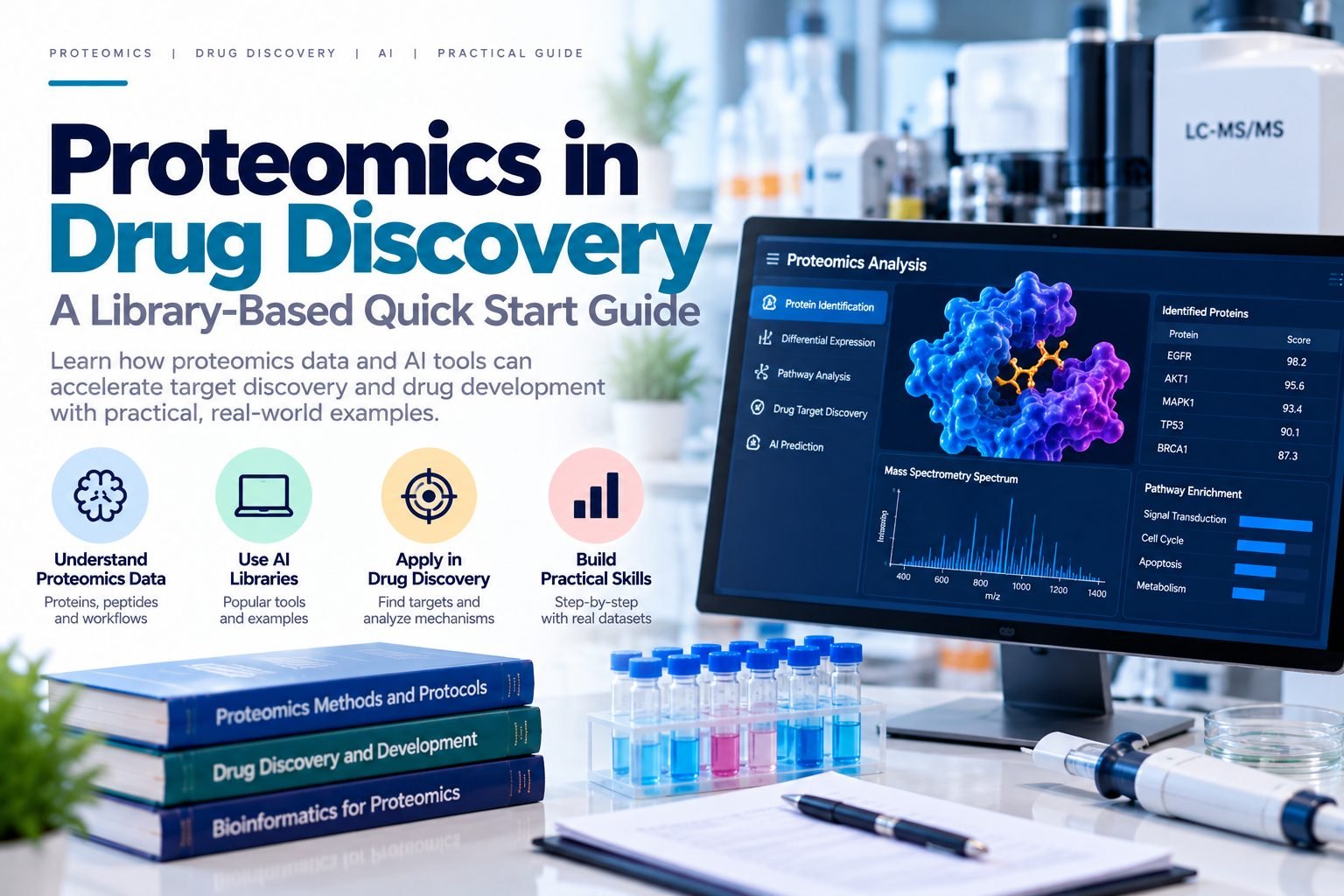
Proteomics is a crucial aspect of drug discovery, as it enables researchers to understand the complex interactions between proteins and small molecules. With the advent of high-throughput technologies, proteomics has become an essential tool for identifying potential drug targets and understanding the mechanisms of disease. In this article, we will provide a comprehensive guide to proteomics in drug discovery, focusing on a library-based quick start approach. We will cover the key concepts, tools, and techniques used in proteomics, along with concrete examples and practical implications.
1. What is Proteomics?
Proteomics is the study of proteins, their structures, functions, and interactions. It involves the analysis of proteins in a cell, tissue, or organism, and the identification of their roles in various biological processes. Proteomics is a multidisciplinary field that combines biochemistry, molecular biology, and biophysics to understand the complex world of proteins. For example, proteomics has been used to identify biomarkers for diseases such as cancer and Alzheimer's, and to develop personalized medicines tailored to individual patients.
2. Why is Proteomics Important in Drug Discovery?
Proteomics is essential in drug discovery because it enables researchers to identify potential drug targets and understand the mechanisms of disease. By analyzing the protein-protein interactions and protein-small molecule interactions, researchers can identify key proteins involved in disease pathways and develop drugs that target these proteins. For instance, proteomics has been used to identify the protein targets of drugs such as aspirin and ibuprofen, and to develop new drugs that target specific proteins involved in inflammation and pain.
3. What is a Library-Based Approach in Proteomics?
A library-based approach in proteomics involves the use of pre-existing libraries of proteins, peptides, or small molecules to screen for potential drug targets. These libraries can be used to identify protein-protein interactions, protein-small molecule interactions, and to develop assays for high-throughput screening. For example, a library of peptides can be used to identify peptides that bind to a specific protein, and these peptides can be used as leads for drug development.
4. Tools and Techniques Used in Proteomics
Several tools and techniques are used in proteomics, including mass spectrometry, nuclear magnetic resonance (NMR) spectroscopy, and X-ray crystallography. These techniques enable researchers to analyze proteins and identify their structures, functions, and interactions. For instance, mass spectrometry can be used to identify proteins in a complex mixture, while NMR spectroscopy can be used to determine the structure of a protein.
5. Concrete Examples of Proteomics in Drug Discovery
Proteomics has been used in several successful drug discovery projects. For example, the development of the drug Gleevec, which targets the BCR-ABL protein in chronic myeloid leukemia, was facilitated by proteomics. Another example is the development of the drug Herceptin, which targets the HER2 protein in breast cancer. In both cases, proteomics was used to identify the protein targets and to develop assays for high-throughput screening.
6. Which One to Try First - A Decision Guide
When starting a proteomics project, it can be challenging to decide which approach to take. A library-based approach can be a good starting point, as it enables researchers to quickly identify potential drug targets and develop assays for high-throughput screening. However, it is essential to consider the specific research question and the available resources before deciding on an approach. For instance, if the research question involves identifying protein-protein interactions, a library-based approach may be more suitable, while if the research question involves identifying protein-small molecule interactions, a different approach may be more suitable.
Conclusion
In conclusion, proteomics is a powerful tool in drug discovery, enabling researchers to identify potential drug targets and understand the mechanisms of disease. A library-based approach can be a useful starting point, as it enables researchers to quickly identify potential drug targets and develop assays for high-throughput screening. By understanding the key concepts, tools, and techniques used in proteomics, researchers can apply this knowledge to develop new drugs and therapies that improve human health.
Common Misconceptions in Proteomics
There are several common misconceptions in proteomics, including the idea that proteomics is only useful for identifying protein structures and functions. However, proteomics can also be used to identify protein-protein interactions, protein-small molecule interactions, and to develop assays for high-throughput screening. Another misconception is that proteomics is a simple and straightforward technique, when in fact it requires specialized equipment and expertise.
Practical Examples of Proteomics in Drug Discovery
There are several practical examples of proteomics in drug discovery, including the development of drugs such as Gleevec and Herceptin. These examples demonstrate the power of proteomics in identifying potential drug targets and developing new drugs and therapies. Another example is the use of proteomics in personalized medicine, where proteomics is used to identify biomarkers for disease and develop personalized treatments tailored to individual patients.
FAQs in Proteomics
There are several frequently asked questions in proteomics, including what is proteomics, why is proteomics important in drug discovery, and what are the tools and techniques used in proteomics. Additionally, researchers may ask about the challenges and limitations of proteomics, and how to overcome these challenges. By understanding the answers to these questions, researchers can apply proteomics to develop new drugs and therapies that improve human health.