
Introduction
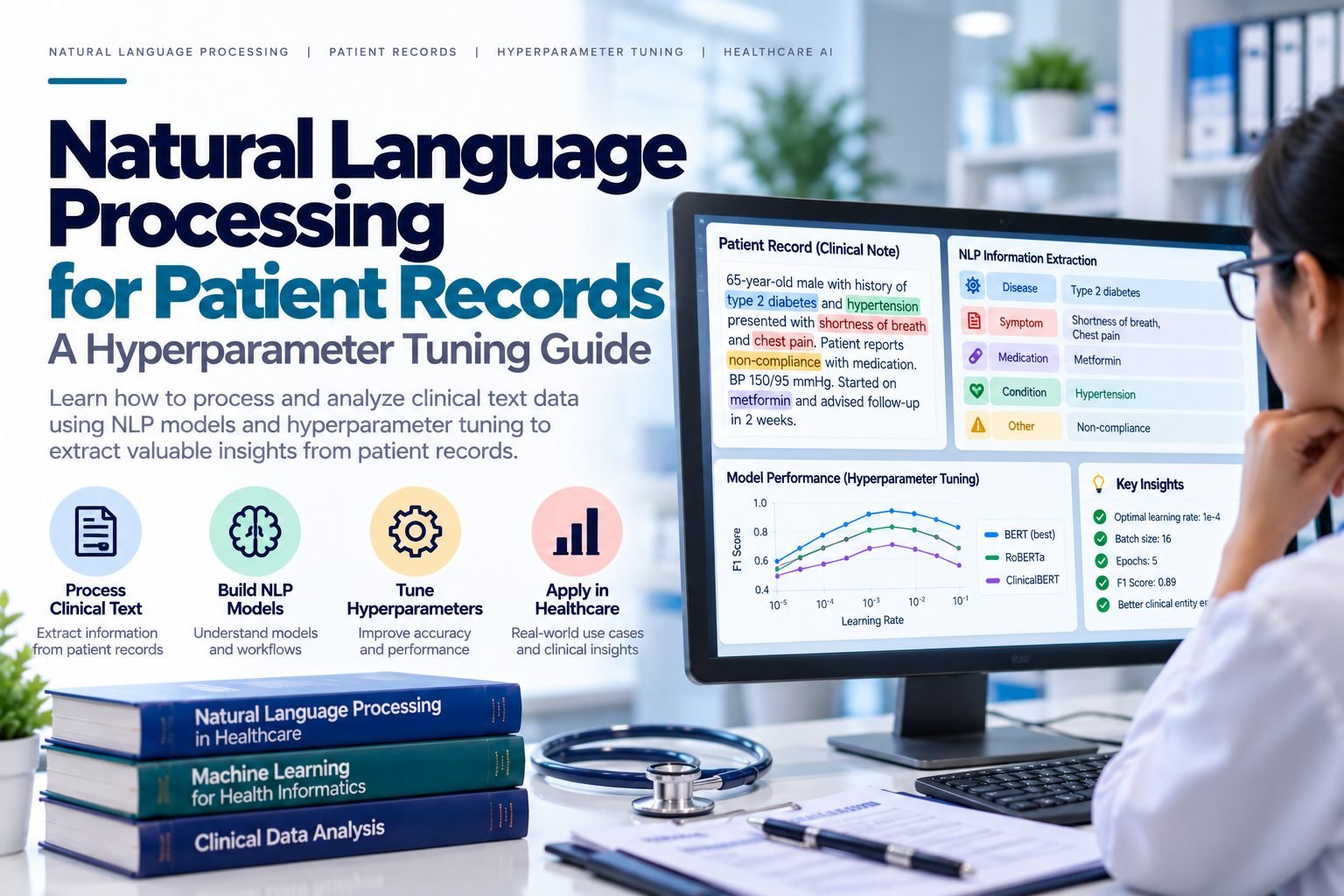
Natural Language Processing (NLP) is a crucial aspect of artificial intelligence that deals with the interaction between computers and humans in natural language. In the context of patient records, NLP can be used to extract relevant information, improve data quality, and enhance patient care. As a pharmacy student or regulatory affairs professional, understanding NLP and its applications in patient records is essential. In this article, we will focus on hyperparameter tuning, a critical aspect of NLP that can significantly impact the performance of NLP models.What it is / what it isn't
NLP for patient records involves using machine learning algorithms to analyze and extract information from unstructured clinical text. It is not just about text analysis, but also about understanding the context, semantics, and syntax of the text. NLP is not a replacement for human judgment, but rather a tool to augment and support clinical decision-making. For example, NLP can be used to identify potential drug interactions, extract medication lists, or detect adverse events.Why it matters for the target audience
As a regulatory affairs professional, understanding NLP and its applications in patient records is critical for ensuring the quality and safety of pharmaceutical products. NLP can help identify potential safety concerns, improve adverse event reporting, and enhance the overall quality of clinical trials. Additionally, NLP can help regulatory affairs professionals to better understand the context and semantics of clinical text, enabling them to make more informed decisions. For instance, NLP can be used to analyze large datasets of patient records to identify patterns and trends that may not be apparent through manual review.Key components or steps
The key components of NLP for patient records include:- Text preprocessing: cleaning and normalizing the text data
- Tokenization: breaking down the text into individual words or tokens
- Part-of-speech tagging: identifying the grammatical category of each word
- Named entity recognition: identifying and extracting specific entities such as medications or diagnoses
- Dependency parsing: analyzing the grammatical structure of the sentence
How it works in practice — a concrete example
Let's consider a concrete example of using NLP to extract medication lists from patient records. The first step would be to preprocess the text data by removing stop words, punctuation, and special characters. Next, we would tokenize the text into individual words or tokens. We would then use named entity recognition to identify and extract the medication names. Finally, we would use dependency parsing to analyze the grammatical structure of the sentence and extract the relevant information. Hyperparameter tuning would be used to adjust the parameters of the machine learning algorithm to optimize its performance.Common challenges
One of the common challenges in NLP for patient records is dealing with the complexity and variability of clinical text. Clinical text can be noisy, incomplete, or inconsistent, which can make it difficult to extract relevant information. Additionally, NLP models can be sensitive to the quality of the training data, which can impact their performance. Another challenge is ensuring the accuracy and reliability of the extracted information, which can have significant implications for patient care.Best practices
To overcome these challenges, it's essential to follow best practices in NLP for patient records. These include:- Using high-quality training data that is representative of the target population
- Preprocessing the text data carefully to remove noise and inconsistencies
- Using robust and reliable NLP algorithms that can handle variability and complexity
- Validating the performance of the NLP model using metrics such as accuracy, precision, and recall
Common misconceptions
One common misconception about NLP for patient records is that it is a replacement for human judgment. While NLP can augment and support clinical decision-making, it is not a replacement for human expertise and judgment. Another misconception is that NLP is only useful for extracting structured data such as medication lists or diagnoses. However, NLP can also be used to extract unstructured data such as clinical notes or patient histories.FAQ — 5 questions readers commonly ask, with detailed answers
Here are five questions readers commonly ask about NLP for patient records, along with detailed answers:- Q: What is the difference between NLP and machine learning? A: NLP is a subfield of machine learning that deals with the interaction between computers and humans in natural language. While machine learning is a broader field that encompasses a range of techniques and algorithms, NLP is a specific application of machine learning to natural language processing.
- Q: Can NLP be used for real-time analysis of patient records? A: Yes, NLP can be used for real-time analysis of patient records. However, this requires careful consideration of the complexity and variability of clinical text, as well as the need for robust and reliable NLP algorithms.
- Q: How can I get started with NLP for patient records? A: To get started with NLP for patient records, you can begin by learning the basics of NLP and machine learning. You can then explore popular NLP libraries and tools such as NLTK, spaCy, or Stanford CoreNLP. Finally, you can practice applying NLP to patient records using publicly available datasets or case studies.
- Q: What are the potential applications of NLP in regulatory affairs? A: The potential applications of NLP in regulatory affairs are numerous and include improving adverse event reporting, enhancing the quality of clinical trials, and detecting potential safety concerns. NLP can also be used to analyze large datasets of patient records to identify patterns and trends that may not be apparent through manual review.
- Q: How can I evaluate the performance of an NLP model for patient records? A: To evaluate the performance of an NLP model for patient records, you can use metrics such as accuracy, precision, and recall. You can also use techniques such as cross-validation to assess the model's performance on unseen data. Finally, you can compare the performance of the NLP model to human annotation or other gold standards to assess its accuracy and reliability.