
Introduction
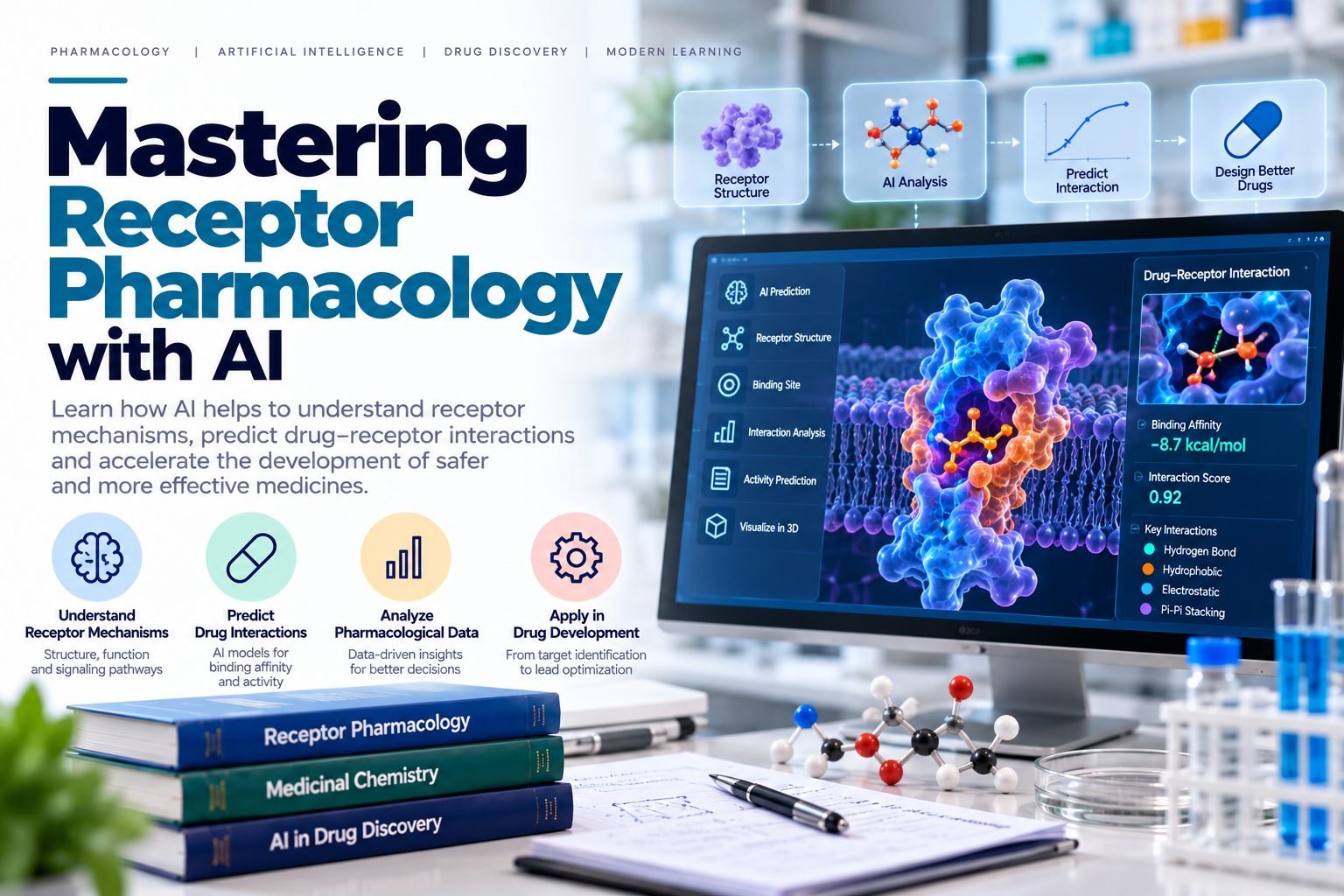
Receptor pharmacology is a crucial aspect of clinical pharmacy, focusing on the interaction between drugs and biological receptors. With the integration of Artificial Intelligence (AI), pharmaceutical industry professionals can enhance their understanding of receptor pharmacology, leading to improved drug development and treatment outcomes. This article provides a project-based learning guide for mastering receptor pharmacology with AI.
What it is / what it isn't
Receptor pharmacology involves the study of how drugs bind to and interact with specific receptors in the body, influencing various physiological responses. It is not just about understanding the chemical structure of drugs, but also how they interact with biological systems. For instance, a drug may bind to a specific receptor, triggering a response that can either activate or inhibit a particular pathway.
Why it matters for the target audience
Pharmaceutical industry professionals, including researchers, clinicians, and pharmacists, need to understand receptor pharmacology to develop effective and safe drugs. AI can aid in this process by analyzing large datasets, identifying patterns, and predicting potential interactions between drugs and receptors. For example, AI can help identify potential off-target effects, where a drug binds to an unintended receptor, causing adverse reactions.
Key components or steps
The key components of receptor pharmacology include understanding the structure and function of receptors, the binding affinity of drugs, and the downstream signaling pathways. With AI, these components can be analyzed and integrated to predict drug efficacy and safety. The steps involved in receptor pharmacology with AI include data collection, data preprocessing, model development, and model validation.
How it works in practice — a concrete example
A concrete example of receptor pharmacology with AI is the development of a predictive model for drug binding affinity. Researchers can collect data on the structure of receptors and drugs, as well as binding affinity measurements. AI algorithms, such as machine learning or deep learning, can then be applied to predict the binding affinity of new drugs, allowing for the identification of potential lead compounds.
Common challenges
Common challenges in receptor pharmacology with AI include the availability and quality of data, the complexity of biological systems, and the need for interpretable models. For instance, the lack of high-quality data on receptor structure and function can limit the accuracy of predictive models. Additionally, the complexity of biological systems can make it difficult to identify the underlying mechanisms of drug-receptor interactions.
Best practices
Best practices for receptor pharmacology with AI include using high-quality data, validating models with experimental data, and considering the limitations of AI algorithms. Researchers should also ensure that their models are interpretable, allowing for the identification of key factors influencing drug-receptor interactions. For example, feature importance analysis can be used to identify the most important receptor features influencing drug binding affinity.
Common misconceptions
A common misconception in receptor pharmacology with AI is that AI can replace experimental approaches. While AI can aid in the prediction of drug-receptor interactions, experimental validation is still necessary to confirm the accuracy of these predictions. Additionally, AI models should not be relied upon solely for decision-making, but rather used in conjunction with experimental data and expert judgment.
FAQ — 5 questions readers commonly ask, with detailed answers
Q: What is the role of AI in receptor pharmacology? A: AI can aid in the analysis of large datasets, identification of patterns, and prediction of potential interactions between drugs and receptors.
Q: What are the key components of receptor pharmacology? A: The key components include understanding the structure and function of receptors, the binding affinity of drugs, and the downstream signaling pathways.
Q: How can AI be used to predict drug binding affinity? A: AI algorithms, such as machine learning or deep learning, can be applied to predict the binding affinity of new drugs, allowing for the identification of potential lead compounds.
Q: What are the common challenges in receptor pharmacology with AI? A: Common challenges include the availability and quality of data, the complexity of biological systems, and the need for interpretable models.
Q: What are the best practices for receptor pharmacology with AI? A: Best practices include using high-quality data, validating models with experimental data, and considering the limitations of AI algorithms.
Conclusion
In conclusion, receptor pharmacology is a crucial aspect of clinical pharmacy, and AI can aid in the understanding of drug-receptor interactions. By following the key components and steps outlined in this article, pharmaceutical industry professionals can master receptor pharmacology with AI, leading to improved drug development and treatment outcomes. It is essential to consider the common challenges and best practices, as well as to address common misconceptions, to ensure the effective application of AI in receptor pharmacology.
Glossary
Receptor: A biological molecule that binds to a specific drug or ligand, triggering a response.
Binding affinity: The strength of the interaction between a drug and a receptor.
Downstream signaling pathways: The biological pathways that are activated or inhibited following drug-receptor binding.
Machine learning: A type of AI algorithm that can learn from data and make predictions or decisions.
Deep learning: A type of machine learning algorithm that uses neural networks to analyze data.