
Introduction
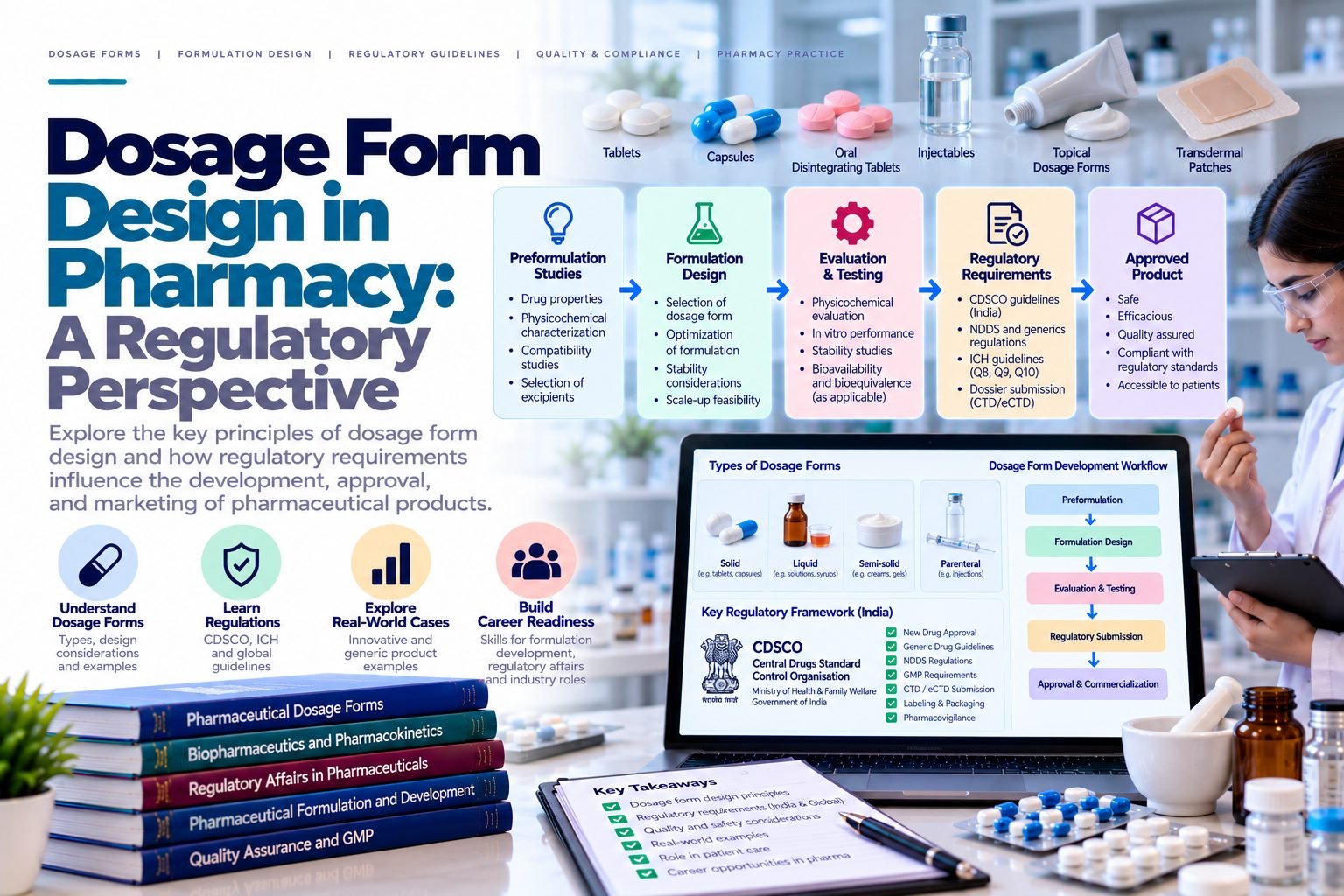
Dosage form design is a critical aspect of pharmacy, as it directly affects the efficacy and safety of medications. The design of a dosage form, such as a tablet or capsule, must balance the needs of the patient, the manufacturer, and regulatory agencies. In this article, we will explore the regulatory perspective of dosage form design, including a case study of a real company.
What it is / what it isn't
Dosage form design refers to the process of creating a medication's physical form, including its shape, size, color, and packaging. It is not just about creating a visually appealing product, but also about ensuring that the medication is safe, effective, and easy to use. Dosage form design is a complex process that involves multiple stakeholders, including pharmacists, engineers, and regulatory experts.
Why it matters for the target audience
Pharmacy graduates preparing for interviews need to understand the regulatory aspects of dosage form design, as it is a critical aspect of the pharmaceutical industry. Regulatory agencies, such as the FDA, play a crucial role in ensuring that medications are safe and effective, and dosage form design is a key aspect of this process. By understanding the regulatory perspective of dosage form design, pharmacy graduates can demonstrate their knowledge and skills to potential employers.
Key components or steps
The key components of dosage form design include:
- Formulation: The process of creating a medication's physical form, including its active ingredients, excipients, and manufacturing process.
- Design: The process of creating the medication's shape, size, color, and packaging.
- Testing: The process of evaluating the medication's safety, efficacy, and quality.
- Regulatory approval: The process of obtaining approval from regulatory agencies, such as the FDA.
How it works in practice — a concrete example
Let's consider a case study of a real company, such as Pfizer. Pfizer's dosage form design process involves a multidisciplinary team of experts, including pharmacists, engineers, and regulatory experts. The team works together to create a medication's physical form, including its shape, size, color, and packaging. For example, Pfizer's dosage form design team might design a new tablet formulation for a medication, including the selection of active ingredients, excipients, and manufacturing process. The team would then test the medication's safety, efficacy, and quality, and submit it for regulatory approval.
Common challenges
Dosage form design can be a complex and challenging process, with multiple stakeholders and regulatory requirements to navigate. Some common challenges include:
- Ensuring that the medication is safe and effective.
- Meeting regulatory requirements, such as those set by the FDA.
- Balancing the needs of the patient, the manufacturer, and regulatory agencies.
Best practices
Best practices for dosage form design include:
- Conducting thorough testing and evaluation of the medication's safety, efficacy, and quality.
- Collaborating with multiple stakeholders, including pharmacists, engineers, and regulatory experts.
- Ensuring that the medication is designed with the patient in mind, including ease of use and accessibility.
Common misconceptions
Some common misconceptions about dosage form design include:
- That dosage form design is only about creating a visually appealing product.
- That regulatory agencies are only concerned with safety and efficacy, and not with other aspects of the medication, such as packaging and labeling.
- That dosage form design is a one-time process, and not an ongoing process that requires continuous evaluation and improvement.
FAQ — 5 questions readers commonly ask, with detailed answers
Here are 5 questions readers commonly ask about dosage form design, with detailed answers:
- Q: What is the role of regulatory agencies in dosage form design? A: Regulatory agencies, such as the FDA, play a crucial role in ensuring that medications are safe and effective, and dosage form design is a key aspect of this process.
- Q: How do pharmacists contribute to dosage form design? A: Pharmacists play a critical role in dosage form design, including the selection of active ingredients, excipients, and manufacturing process.
- Q: What are some common challenges in dosage form design? A: Some common challenges in dosage form design include ensuring that the medication is safe and effective, meeting regulatory requirements, and balancing the needs of the patient, the manufacturer, and regulatory agencies.
- Q: What are some best practices for dosage form design? A: Best practices for dosage form design include conducting thorough testing and evaluation of the medication's safety, efficacy, and quality, collaborating with multiple stakeholders, and ensuring that the medication is designed with the patient in mind.
- Q: How can pharmacy graduates demonstrate their knowledge and skills in dosage form design to potential employers? A: Pharmacy graduates can demonstrate their knowledge and skills in dosage form design by understanding the regulatory aspects of dosage form design, including the role of regulatory agencies, the selection of active ingredients and excipients, and the importance of testing and evaluation.
Conclusion
In conclusion, dosage form design is a critical aspect of pharmacy, with a complex and challenging process that involves multiple stakeholders and regulatory requirements. By understanding the regulatory perspective of dosage form design, pharmacy graduates can demonstrate their knowledge and skills to potential employers, and contribute to the development of safe and effective medications.