
Introduction
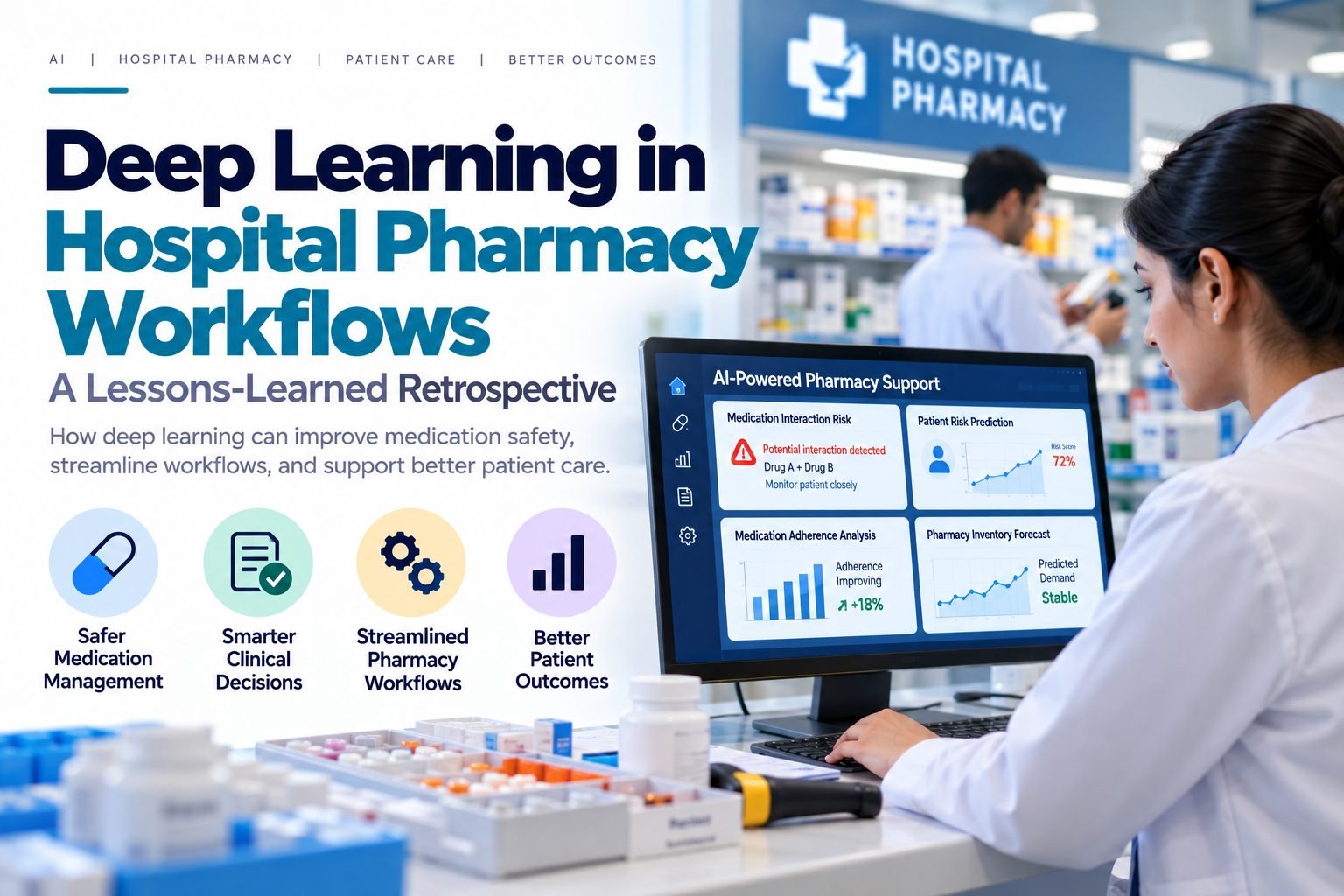
Deep learning, a subset of machine learning, has been gaining traction in various industries, including healthcare. In hospital pharmacy settings, deep learning can be applied to improve patient care, streamline workflows, and reduce costs. This article aims to provide a comprehensive overview of deep learning in hospital pharmacy workflows, highlighting its benefits, challenges, and best practices.What it is / what it isn't
Deep learning is a type of machine learning that involves the use of artificial neural networks to analyze data. In the context of hospital pharmacy workflows, deep learning can be applied to tasks such as medication management, patient data analysis, and supply chain optimization. It is essential to note that deep learning is not a replacement for human pharmacists, but rather a tool to augment their capabilities and improve patient care.Why it matters for the target audience
For research scholars in pharmaceutical sciences, understanding deep learning in hospital pharmacy workflows is crucial for developing innovative solutions to improve patient care. By applying deep learning techniques, researchers can analyze large datasets, identify patterns, and develop predictive models to optimize medication management and patient outcomes.Key components or steps
The key components of deep learning in hospital pharmacy workflows include:- Data collection and preprocessing
- Model development and training
- Model deployment and integration
- Continuous monitoring and evaluation
How it works in practice — a concrete example
A concrete example of deep learning in hospital pharmacy workflows is the use of natural language processing (NLP) to analyze patient medical records and identify potential medication errors. For instance, a deep learning model can be trained to analyze patient data and detect potential interactions between medications, alerting pharmacists to take corrective action.Common challenges
Despite the benefits of deep learning in hospital pharmacy workflows, there are several challenges that need to be addressed, including:- Data quality and availability
- Model interpretability and explainability
- Regulatory and ethical considerations
- Integration with existing systems and workflows
Best practices
To ensure the effective application of deep learning in hospital pharmacy workflows, several best practices should be followed, including:- Collaboration between pharmacists, data scientists, and other stakeholders
- Use of high-quality, diverse, and relevant data
- Regular model evaluation and updating
- Consideration of regulatory and ethical implications
Common misconceptions
There are several common misconceptions about deep learning in hospital pharmacy workflows, including:- Deep learning is a replacement for human pharmacists
- Deep learning is only applicable to large datasets
- Deep learning is not regulated by existing laws and regulations
FAQ — 5 questions readers commonly ask, with detailed answers
Here are 5 frequently asked questions about deep learning in hospital pharmacy workflows, along with detailed answers:- Q: What is the role of deep learning in hospital pharmacy workflows? A: Deep learning can be applied to tasks such as medication management, patient data analysis, and supply chain optimization to improve patient care and operational efficiency.
- Q: How does deep learning improve patient care in hospital pharmacy settings? A: Deep learning can help identify potential medication errors, optimize medication management, and improve patient outcomes through predictive modeling and analysis of large datasets.
- Q: What are the regulatory implications of deep learning in hospital pharmacy workflows? A: Deep learning solutions in hospital pharmacy settings are subject to existing laws and regulations, including HIPAA and FDA guidelines, and must be designed and implemented with these regulations in mind.
- Q: Can deep learning be applied to small datasets in hospital pharmacy settings? A: While deep learning typically requires large datasets, techniques such as transfer learning and data augmentation can be used to apply deep learning to smaller datasets in hospital pharmacy settings.
- Q: How can hospital pharmacies ensure the effective integration of deep learning solutions with existing systems and workflows? A: Hospital pharmacies can ensure effective integration by collaborating with data scientists and other stakeholders, using standardized data formats, and regularly evaluating and updating deep learning models.