
Introduction
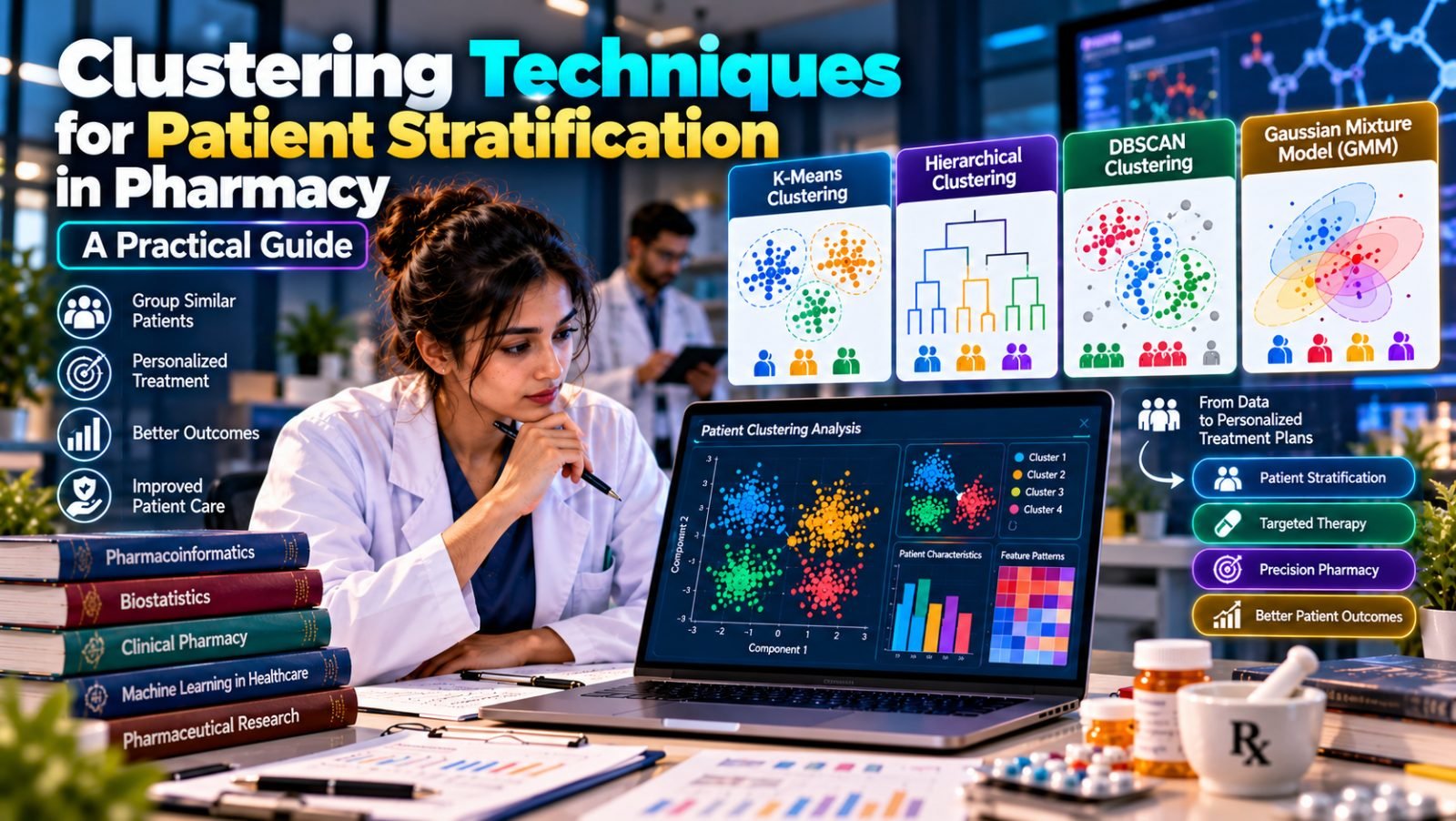
Clustering techniques are essential in pharmacy for patient stratification, which involves grouping patients with similar characteristics to receive personalized treatment. This approach can lead to better treatment outcomes and improved patient care. In this article, we will explore the top clustering techniques used in pharmacy, with a focus on small datasets. We will discuss what each technique is, why it matters, and provide concrete examples.1. K-Means Clustering
K-Means clustering is a widely used technique in pharmacy for patient stratification. It works by grouping patients into K clusters based on their characteristics, such as age, gender, and medical history. This technique matters because it allows pharmacy professionals to identify patterns in patient data and develop targeted treatment plans. For example, a study used K-Means clustering to identify subgroups of patients with diabetes and developed personalized treatment plans based on their characteristics.2. Hierarchical Clustering
Hierarchical clustering is another technique used in pharmacy for patient stratification. It works by building a hierarchy of clusters, where patients are grouped into smaller clusters based on their similarities. This technique matters because it allows pharmacy professionals to identify complex relationships between patient characteristics and develop more effective treatment plans. For example, a study used hierarchical clustering to identify subgroups of patients with cancer and developed targeted treatment plans based on their genetic profiles.3. DBSCAN Clustering
DBSCAN clustering is a density-based technique used in pharmacy for patient stratification. It works by grouping patients into clusters based on their density and proximity to each other. This technique matters because it allows pharmacy professionals to identify patterns in patient data that may not be apparent using other techniques. For example, a study used DBSCAN clustering to identify subgroups of patients with cardiovascular disease and developed personalized treatment plans based on their lifestyle and genetic factors.4. Gaussian Mixture Model Clustering
Gaussian Mixture Model clustering is a probabilistic technique used in pharmacy for patient stratification. It works by modeling the distribution of patient characteristics using a mixture of Gaussian distributions. This technique matters because it allows pharmacy professionals to identify complex patterns in patient data and develop more effective treatment plans. For example, a study used Gaussian Mixture Model clustering to identify subgroups of patients with mental health disorders and developed personalized treatment plans based on their symptoms and genetic profiles.Which One to Try First?
Choosing the right clustering technique for patient stratification in pharmacy can be challenging. To decide which technique to try first, consider the size and complexity of your dataset, as well as the research question you are trying to answer. If you have a small dataset with simple characteristics, K-Means clustering may be a good starting point. If you have a larger dataset with complex characteristics, hierarchical or DBSCAN clustering may be more suitable. If you want to model the distribution of patient characteristics, Gaussian Mixture Model clustering may be the best choice.Conclusion
Clustering techniques are essential in pharmacy for patient stratification, and each technique has its strengths and weaknesses. By understanding the different clustering techniques available, pharmacy professionals can develop more effective treatment plans and improve patient outcomes. Whether you are working with small datasets or complex patient characteristics, there is a clustering technique that can help you achieve your research goals.Frequently Asked Questions
- Q: What is clustering in pharmacy? A: Clustering in pharmacy refers to the process of grouping patients with similar characteristics to receive personalized treatment.
- Q: What are the benefits of clustering in pharmacy? A: The benefits of clustering in pharmacy include improved treatment outcomes, increased patient satisfaction, and more effective use of resources.
- Q: What is the difference between K-Means and hierarchical clustering? A: K-Means clustering groups patients into K clusters based on their characteristics, while hierarchical clustering builds a hierarchy of clusters based on patient similarities.
- Q: Can clustering techniques be used with small datasets? A: Yes, clustering techniques can be used with small datasets, but the results may be less accurate than those obtained with larger datasets.
- Q: How do I choose the right clustering technique for my research question? A: To choose the right clustering technique, consider the size and complexity of your dataset, as well as the research question you are trying to answer.
Common Misconceptions
- Clustering techniques are only used in pharmacy for patient stratification. While patient stratification is a common application of clustering techniques in pharmacy, they can also be used for other purposes, such as identifying patterns in patient data or developing personalized treatment plans.
- Clustering techniques require large datasets to be effective. While larger datasets can provide more accurate results, clustering techniques can be used with small datasets as well.
- Clustering techniques are only suitable for simple patient characteristics. Clustering techniques can be used with complex patient characteristics, such as genetic profiles or medical histories.
- Clustering techniques are not suitable for pharmacy research. Clustering techniques are widely used in pharmacy research to identify patterns in patient data and develop more effective treatment plans.
Practical Application
To apply clustering techniques in pharmacy practice, follow these steps:- Define your research question and identify the patient characteristics you want to cluster.
- Collect and preprocess your data, including handling missing values and normalizing your data.
- Choose a clustering technique based on the size and complexity of your dataset, as well as your research question.
- Apply the clustering technique to your data and evaluate the results using metrics such as silhouette score or Calinski-Harabasz index.
- Refine your clustering model by adjusting parameters or trying different techniques.
- Interpret your results and develop personalized treatment plans based on the clusters you have identified.