
Introduction
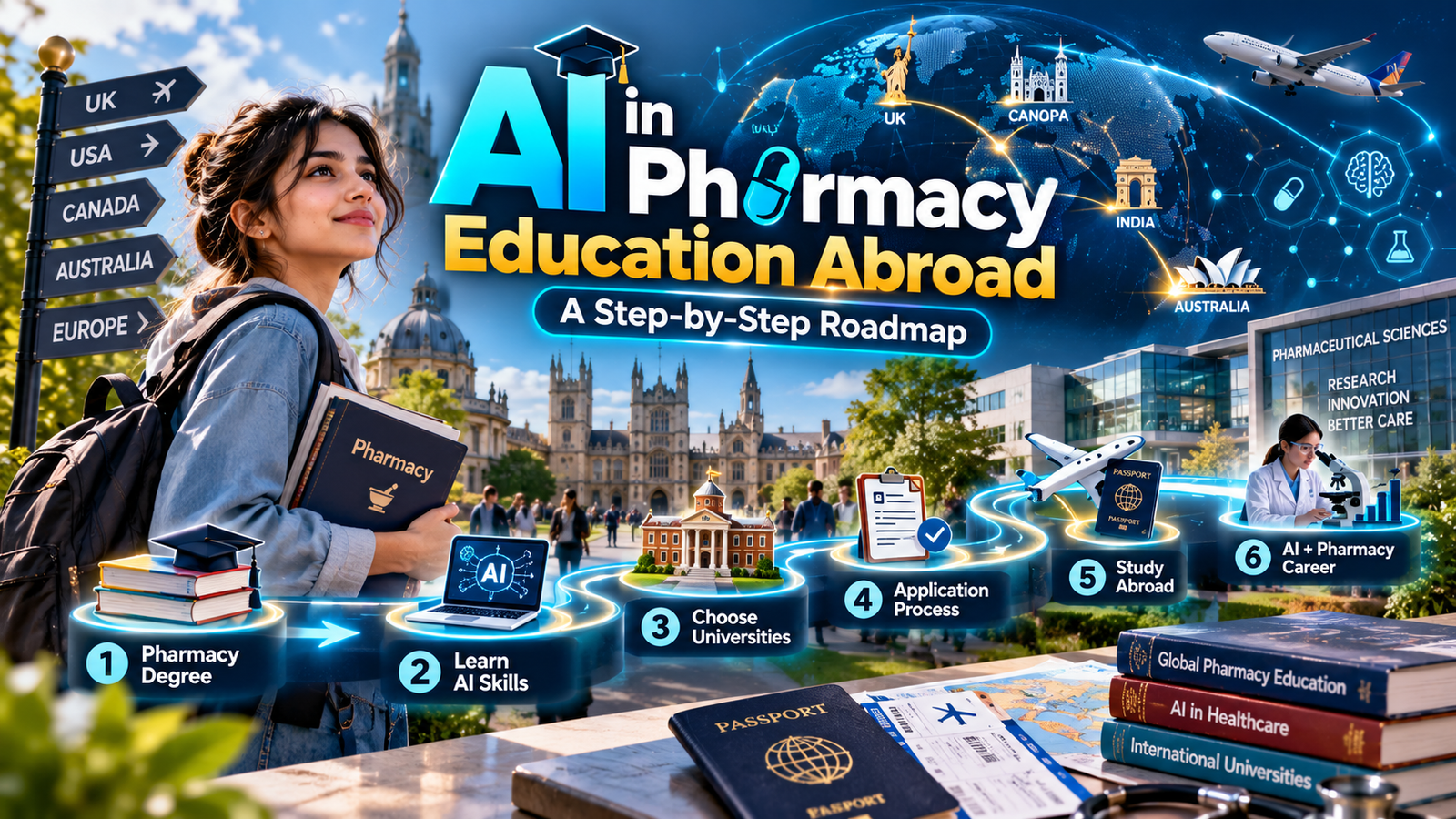
Artificial intelligence (AI) is transforming the field of pharmacy, and higher studies abroad can provide students with a competitive edge. With a step-by-step roadmap, pharmacy students and faculty can navigate the complexities of AI in pharmacy education abroad. For instance, the University of Oxford's Department of Pharmacy offers a master's program in pharmaceutical sciences with a focus on AI and machine learning.
What it is / what it isn't
AI in pharmacy education abroad refers to the use of machine learning algorithms and data analytics to improve patient outcomes, optimize medication use, and streamline clinical workflows. It is not a replacement for human pharmacists but rather a tool to enhance their decision-making capabilities. For example, the University of California, San Francisco's (UCSF) School of Pharmacy has developed an AI-powered platform to personalize medication therapy for patients with complex diseases.
Why it matters for the target audience
Pharmacy faculty members can benefit from AI in higher studies abroad by gaining expertise in AI-powered pharmacy education, which can be applied to improve student learning outcomes and patient care. Moreover, AI can help faculty members stay up-to-date with the latest advancements in pharmaceutical sciences, enhancing their research and teaching capabilities. The University of Toronto's Leslie Dan Faculty of Pharmacy, for instance, offers a certificate program in AI and data science for pharmacy professionals.
Key components or steps
The key components of AI in pharmacy education abroad include data analytics, machine learning, natural language processing, and computer vision. The steps involved in implementing AI in pharmacy education abroad include:
- Identifying the need for AI in pharmacy education
- Developing a curriculum that incorporates AI and data science
- Collaborating with industry partners to access AI-powered tools and technologies
- Evaluating the effectiveness of AI in improving student learning outcomes and patient care
How it works in practice — a concrete example
The University of California, Los Angeles's (UCLA) School of Pharmacy has developed an AI-powered platform to optimize medication use in patients with chronic diseases. The platform uses machine learning algorithms to analyze electronic health records and identify patients who are at risk of medication-related complications. The platform then provides personalized recommendations to pharmacists and clinicians to optimize medication therapy. This example illustrates how AI can be applied in practice to improve patient outcomes and streamline clinical workflows.
Common challenges
Common challenges in implementing AI in pharmacy education abroad include lack of expertise in AI and data science, limited access to AI-powered tools and technologies, and concerns about data privacy and security. Moreover, integrating AI into existing curriculum and clinical workflows can be a significant challenge. The University of British Columbia's Faculty of Pharmaceutical Sciences, for instance, has established a center for excellence in AI and data science to address these challenges and provide support to faculty members and students.
Best practices
Best practices in AI in pharmacy education abroad include:
- Collaborating with industry partners to access AI-powered tools and technologies
- Developing a curriculum that incorporates AI and data science
- Evaluating the effectiveness of AI in improving student learning outcomes and patient care
- Providing ongoing support and training to faculty members and students in AI and data science
Common misconceptions
Common misconceptions about AI in pharmacy education abroad include the belief that AI will replace human pharmacists, that AI is only applicable to research and not practice, and that AI requires significant expertise in computer programming. However, AI can be applied in a variety of settings, including clinical practice, and can be used by pharmacists with limited programming expertise. The University of Wisconsin-Madison's School of Pharmacy, for instance, offers a course in AI and data science for pharmacists that does not require prior programming experience.
FAQ — 5 questions readers commonly ask, with detailed answers
Q: What is the role of AI in pharmacy education abroad? A: AI plays a significant role in pharmacy education abroad by enhancing student learning outcomes, optimizing medication use, and streamlining clinical workflows. Q: Do I need to have expertise in computer programming to use AI in pharmacy education abroad? A: No, AI can be used by pharmacists with limited programming expertise, and many AI-powered tools and technologies are designed to be user-friendly. Q: How can I integrate AI into my existing curriculum and clinical workflows? A: Integrating AI into existing curriculum and clinical workflows requires collaboration with industry partners, development of a curriculum that incorporates AI and data science, and ongoing support and training for faculty members and students. Q: What are the common challenges in implementing AI in pharmacy education abroad? A: Common challenges include lack of expertise in AI and data science, limited access to AI-powered tools and technologies, and concerns about data privacy and security. Q: How can I evaluate the effectiveness of AI in improving student learning outcomes and patient care? A: Evaluating the effectiveness of AI requires ongoing assessment and feedback from students, faculty members, and patients, as well as analysis of data on student learning outcomes and patient care.
Conclusion
In conclusion, AI in pharmacy education abroad offers a range of benefits, including enhanced student learning outcomes, optimized medication use, and streamlined clinical workflows. By following a step-by-step roadmap and collaborating with industry partners, pharmacy faculty members can integrate AI into their existing curriculum and clinical workflows, ultimately improving patient care and outcomes. The University of Texas at Austin's College of Pharmacy, for example, has established a center for excellence in AI and data science to support faculty members and students in their efforts to apply AI in pharmacy education and practice.