
Introduction
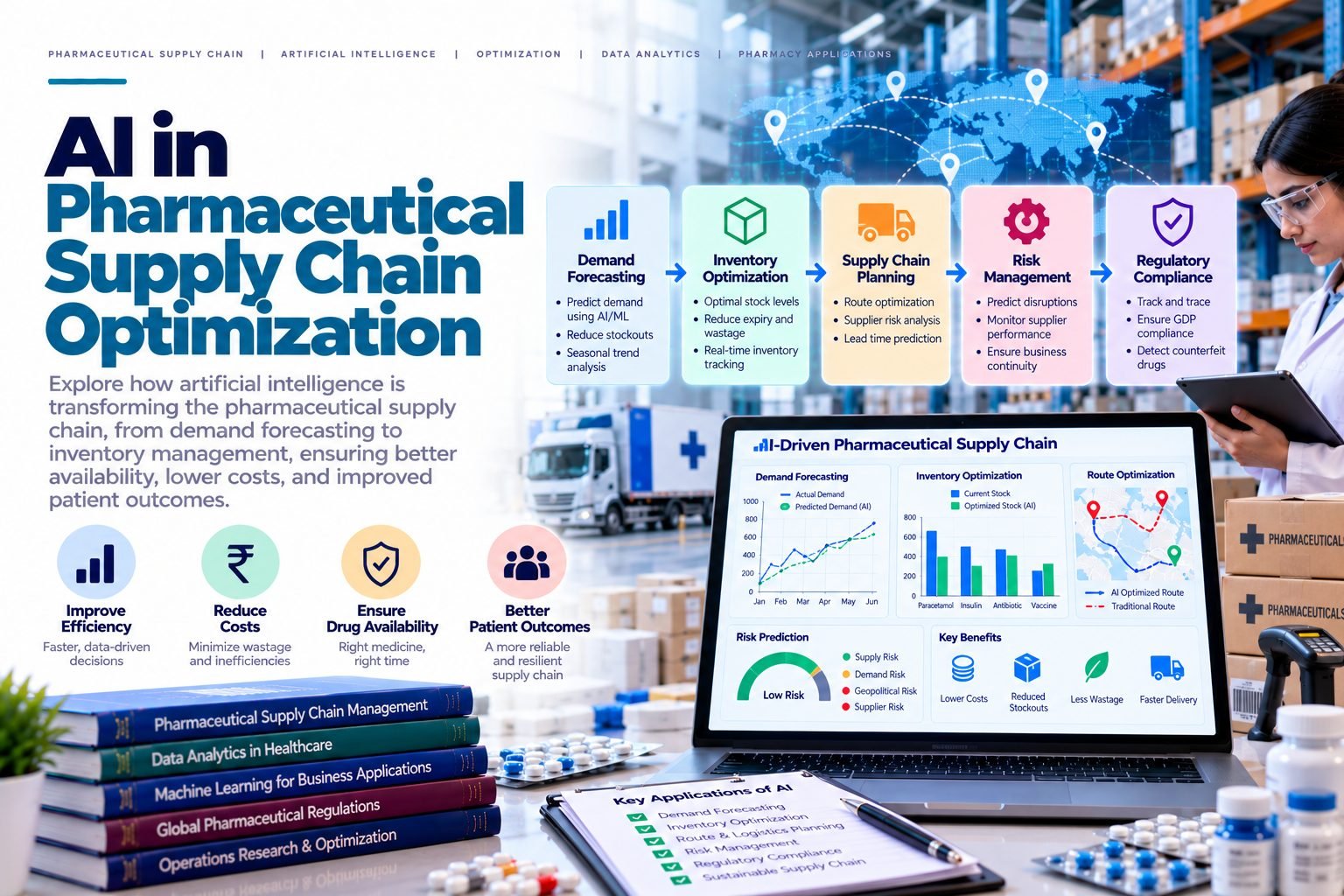
Pharmaceutical supply chain optimization is crucial for ensuring the availability of medications and reducing costs. Artificial intelligence (AI) plays a significant role in this process. With the help of feature engineering, AI can analyze large datasets and identify patterns to optimize supply chain operations. In this article, we will explore the role of AI in pharmaceutical supply chain optimization, with a focus on feature engineering, and provide a career guide for pharmacy students and researchers.
What it is / what it isn't
AI in pharmaceutical supply chain optimization refers to the use of machine learning algorithms and feature engineering techniques to analyze data and make predictions or decisions. It is not just about automating manual processes, but about using data-driven insights to improve supply chain operations. For example, AI can be used to predict demand, identify potential supply chain disruptions, and optimize inventory management.
Why it matters for the target audience
Pharmacy students and researchers need to understand the role of AI in pharmaceutical supply chain optimization to stay competitive in the industry. With the increasing use of AI in supply chain management, professionals with expertise in this area will be in high demand. Moreover, AI can help improve patient outcomes by ensuring that medications are available when needed, and by reducing the risk of supply chain disruptions.
Key components or steps
The key components of AI in pharmaceutical supply chain optimization include data collection, data preprocessing, feature engineering, model training, and model deployment. Feature engineering is a critical step in this process, as it involves selecting and transforming the most relevant features from the data to improve model performance. For example, in a study on supply chain optimization, researchers used feature engineering to select the most relevant features from a dataset of supply chain data, and then used machine learning algorithms to predict demand and optimize inventory management.
How it works in practice — a concrete example
A pharmaceutical company uses AI to optimize its supply chain operations. The company collects data on supply chain operations, including demand, inventory levels, and shipping times. The data is then preprocessed and feature engineered to select the most relevant features. A machine learning model is then trained on the data to predict demand and optimize inventory management. The model is deployed in a cloud-based platform, and the company uses the predictions to make informed decisions about supply chain operations. For example, the model predicts a surge in demand for a particular medication, and the company increases production and shipping to meet the demand.
Common challenges
One of the common challenges in AI-powered pharmaceutical supply chain optimization is data quality. Poor data quality can lead to inaccurate predictions and decisions. Another challenge is the lack of standardization in data collection and feature engineering. Different companies may use different data collection methods and feature engineering techniques, making it difficult to compare and contrast results. For example, a study on supply chain optimization found that data quality issues led to inaccurate predictions and decisions, resulting in stockouts and lost sales.
Best practices
Best practices in AI-powered pharmaceutical supply chain optimization include using high-quality data, standardizing data collection and feature engineering methods, and continuously monitoring and updating models. Companies should also consider using cloud-based platforms to deploy models and make predictions, as this can improve scalability and reduce costs. For example, a pharmaceutical company used a cloud-based platform to deploy its machine learning model, and was able to scale up its supply chain operations to meet increasing demand.
Common misconceptions
One common misconception about AI in pharmaceutical supply chain optimization is that it is a replacement for human judgment. However, AI is meant to augment human decision-making, not replace it. Another misconception is that AI requires large amounts of data to be effective. While data is important, AI can also be effective with smaller datasets, as long as the data is high-quality and relevant. For example, a study on supply chain optimization found that AI can be effective with smaller datasets, as long as the data is carefully selected and feature engineered.
FAQ — 5 questions readers commonly ask, with detailed answers
Q: What is the role of feature engineering in AI-powered pharmaceutical supply chain optimization? A: Feature engineering is the process of selecting and transforming the most relevant features from the data to improve model performance. It is a critical step in AI-powered pharmaceutical supply chain optimization, as it can improve the accuracy of predictions and decisions.
Q: How can companies ensure high-quality data for AI-powered pharmaceutical supply chain optimization? A: Companies can ensure high-quality data by using standardized data collection methods, checking for errors and inconsistencies, and using data validation techniques.
Q: What are the benefits of using cloud-based platforms for AI-powered pharmaceutical supply chain optimization? A: Cloud-based platforms can improve scalability, reduce costs, and provide real-time predictions and decisions.
Q: How can companies deploy AI models in pharmaceutical supply chain optimization? A: Companies can deploy AI models using cloud-based platforms, and can use APIs to integrate the models with existing supply chain systems.
Q: What are the future directions for AI in pharmaceutical supply chain optimization? A: Future directions include the use of more advanced machine learning algorithms, such as deep learning and reinforcement learning, and the integration of AI with other technologies, such as blockchain and Internet of Things (IoT).
Conclusion
In conclusion, AI in pharmaceutical supply chain optimization is a critical area of research and practice, with significant potential to improve patient outcomes and reduce costs. Pharmacy students and researchers need to understand the role of AI in this area, and how to apply feature engineering and machine learning techniques to optimize supply chain operations. By following best practices and avoiding common misconceptions, companies can ensure high-quality data, accurate predictions, and informed decisions. As the field continues to evolve, we can expect to see more advanced machine learning algorithms and technologies being applied to pharmaceutical supply chain optimization.