
Introduction
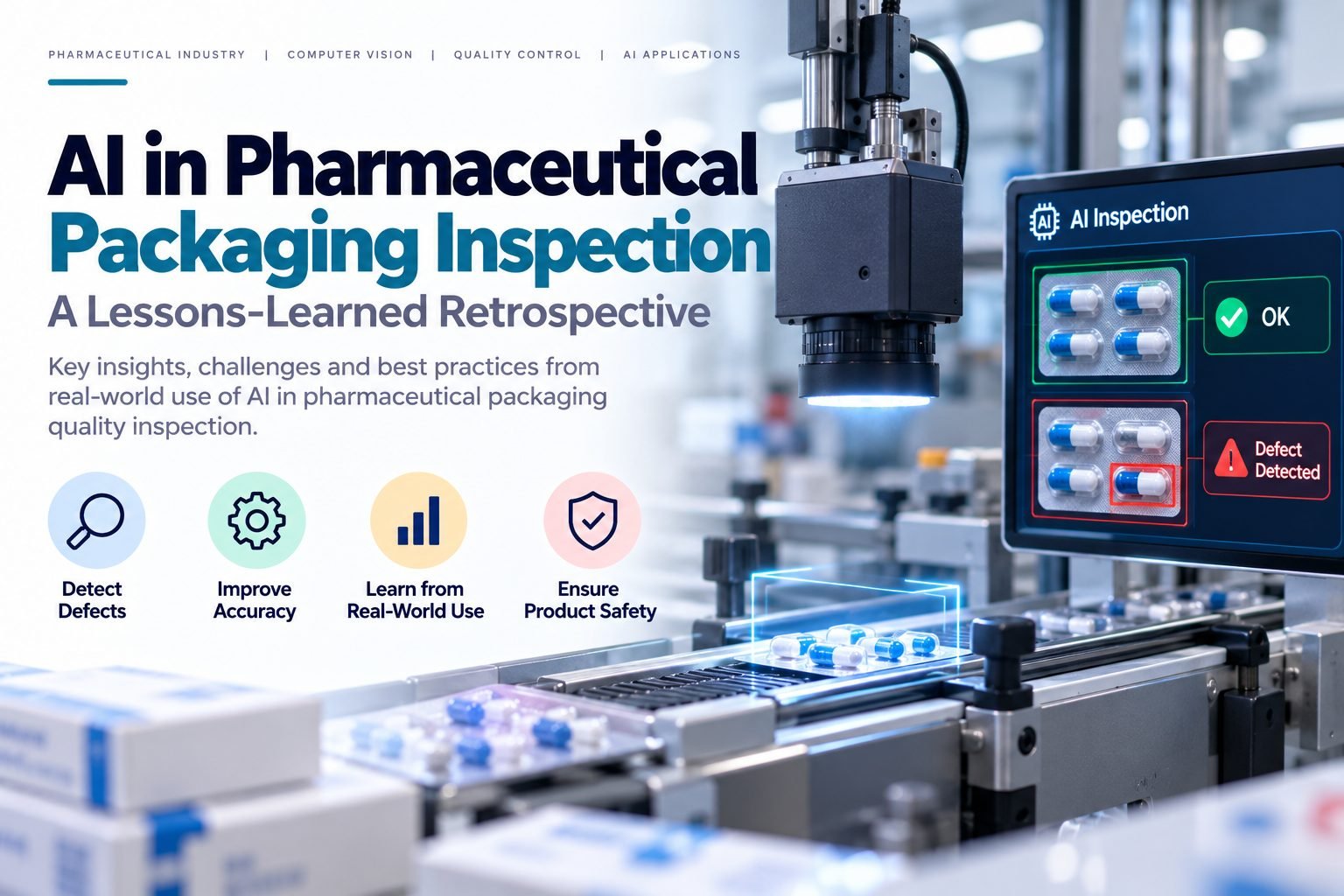
Pharmaceutical packaging inspection is a critical process that ensures the quality and safety of medications. The use of Artificial Intelligence (AI) in this process has gained significant attention in recent years. AI can help improve the efficiency and accuracy of inspection, reducing the risk of errors and improving patient outcomes. In this article, we will explore the application of AI in pharmaceutical packaging inspection, highlighting key components, challenges, and best practices.
What it is / what it isn't
AI in pharmaceutical packaging inspection refers to the use of machine learning algorithms and computer vision to inspect packaging for defects, errors, or inconsistencies. This can include checks for label accuracy, packaging integrity, and product authenticity. It is not a replacement for human inspectors, but rather a tool to augment their capabilities and improve overall quality control.
For example, a pharmaceutical company may use AI-powered computer vision to inspect labels for accuracy, checking for errors in dosage instructions or expiration dates.
Why it matters for the target audience
For aspiring healthcare data scientists, understanding the application of AI in pharmaceutical packaging inspection is crucial for improving patient outcomes and ensuring the quality of medications. By leveraging AI, pharmaceutical companies can reduce the risk of errors, improve efficiency, and enhance overall quality control. This is particularly important in the pharmaceutical industry, where even small errors can have significant consequences for patient safety.
For instance, a study found that AI-powered inspection systems can reduce error rates by up to 90%, compared to traditional human inspection methods.
Key components or steps
The key components of AI in pharmaceutical packaging inspection include:
- Machine learning algorithms: These are used to train models to detect defects or errors in packaging.
- Computer vision: This is used to capture and analyze images of packaging for inspection.
- Data annotation: This is the process of labeling data to train machine learning models.
- Quality control: This refers to the processes and procedures in place to ensure the accuracy and reliability of inspection results.
For example, a pharmaceutical company may use a machine learning algorithm to train a model to detect defects in packaging, such as tears or creases.
How it works in practice — a concrete example
A pharmaceutical company may implement an AI-powered inspection system to check labels for accuracy. The system would use computer vision to capture images of labels, and then use machine learning algorithms to detect errors or inconsistencies. If an error is detected, the system would alert quality control personnel to take corrective action.
For instance, a company may use a system that can detect errors in label text, such as misspellings or incorrect dosage instructions.
Common challenges
Common challenges in implementing AI in pharmaceutical packaging inspection include:
- Data quality: Poor data quality can affect the accuracy of machine learning models.
- Regulatory compliance: Pharmaceutical companies must comply with regulatory requirements for quality control and inspection.
- Integration with existing systems: AI-powered inspection systems must be integrated with existing quality control processes and systems.
For example, a company may face challenges in integrating an AI-powered inspection system with their existing quality control software.
Best practices
Best practices for implementing AI in pharmaceutical packaging inspection include:
- Ensuring data quality: This includes ensuring that data is accurate, complete, and consistent.
- Validating machine learning models: This includes testing and validating models to ensure they are accurate and reliable.
- Providing training and support: This includes providing training and support to quality control personnel to ensure they understand how to use AI-powered inspection systems.
For instance, a company may establish a data governance policy to ensure data quality and integrity.
Common misconceptions
Common misconceptions about AI in pharmaceutical packaging inspection include:
- AI will replace human inspectors: While AI can augment human inspection, it is not a replacement for human inspectors.
- AI is only for large pharmaceutical companies: AI can be implemented by pharmaceutical companies of all sizes, including small and medium-sized enterprises.
- AI is too complex to implement: While AI can be complex, it can be implemented using existing infrastructure and personnel.
For example, a small pharmaceutical company may implement an AI-powered inspection system using cloud-based services and existing personnel.
Frequently Asked Questions
- Q: What is the benefit of using AI in pharmaceutical packaging inspection?
- A: The benefit of using AI is improved efficiency, accuracy, and quality control, reducing the risk of errors and improving patient outcomes.
- Q: Can AI replace human inspectors?
- A: No, AI is not a replacement for human inspectors, but rather a tool to augment their capabilities and improve overall quality control.
- Q: How do I ensure data quality for AI-powered inspection systems?
- A: Ensuring data quality includes ensuring that data is accurate, complete, and consistent, and establishing a data governance policy to ensure data integrity.
- Q: What are the regulatory requirements for AI-powered inspection systems?
- A: Pharmaceutical companies must comply with regulatory requirements for quality control and inspection, including FDA and EU regulations.
- Q: How do I integrate an AI-powered inspection system with existing quality control processes?
- A: Integrating an AI-powered inspection system with existing quality control processes includes ensuring compatibility with existing software and systems, and providing training and support to quality control personnel.
Conclusion
In conclusion, AI in pharmaceutical packaging inspection is a critical application of machine learning and computer vision that can improve efficiency, accuracy, and quality control. By understanding the key components, challenges, and best practices, pharmaceutical companies can implement AI-powered inspection systems to reduce the risk of errors and improve patient outcomes. As the pharmaceutical industry continues to evolve, the use of AI in packaging inspection will become increasingly important for ensuring the quality and safety of medications.