
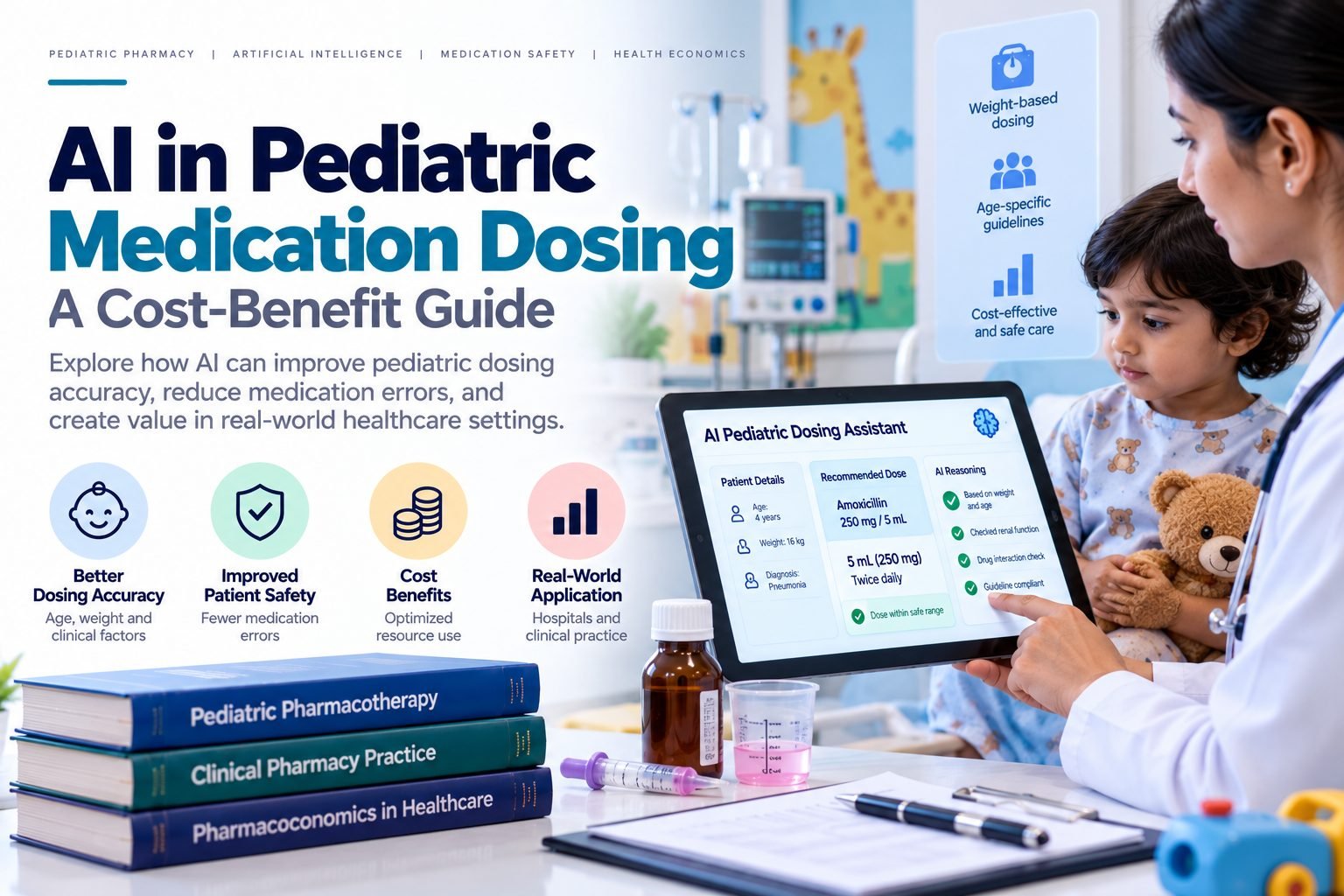
Introduction — Define the Topic and Why it Matters
Pediatric medication dosing is a critical aspect of pharmacy practice. Incorrect dosing can lead to adverse reactions, overdose, or underdose. Artificial intelligence (AI) can help improve dosing accuracy and reduce costs. This guide will explore the use of AI in pediatric medication dosing, with a focus on cost-benefit considerations.
A concrete example of AI in pediatric medication dosing is the use of machine learning algorithms to predict drug toxicity in children. For instance, a study published in the Journal of Pediatric Pharmacology and Therapeutics used machine learning to develop a model that predicted the risk of toxicity in children treated with chemotherapy.
What it is / What it isn't
AI in pediatric medication dosing refers to the use of computer algorithms to analyze data and make predictions about the best dose of a medication for a child. It is not a replacement for human judgment, but rather a tool to support pharmacists and healthcare professionals in making informed decisions.
For example, a pediatric pharmacist may use an AI-powered dosing calculator to determine the optimal dose of a medication for a child based on their age, weight, and medical history. The calculator can take into account various factors, such as the child's renal function, liver function, and other medications they are taking.
Why it Matters for the Target Audience
Pharmacy students and professionals need to understand the benefits and limitations of AI in pediatric medication dosing. By leveraging AI, pharmacists can improve patient outcomes, reduce costs, and enhance their professional practice. A study published in the Journal of the American Pharmacists Association found that the use of AI-powered dosing calculators reduced medication errors by 25% in a pediatric hospital.
For instance, a pediatric pharmacist may use AI to identify potential drug interactions in a child's medication regimen. This can help prevent adverse reactions and improve patient safety.
Key Components or Steps
The key components of AI in pediatric medication dosing include data collection, algorithm development, and model validation. Pharmacists and healthcare professionals must work together to ensure that the data used to train the algorithms is accurate and relevant.
A concrete example of the key components is the use of electronic health records (EHRs) to collect data on pediatric patients. EHRs can provide valuable information on medication use, dosing, and patient outcomes, which can be used to develop and validate AI-powered dosing models.
How it Works in Practice — A Concrete Example
A pediatric hospital implemented an AI-powered dosing calculator to improve medication safety. The calculator used machine learning algorithms to analyze data from EHRs and predict the optimal dose of medications for children. The hospital saw a significant reduction in medication errors and improved patient outcomes.
For example, the calculator was used to determine the optimal dose of acetaminophen for a 10-year-old child with a fever. The calculator took into account the child's weight, age, and medical history, and recommended a dose that was tailored to their individual needs.
Common Challenges
Common challenges in implementing AI in pediatric medication dosing include data quality issues, algorithm bias, and regulatory hurdles. Pharmacists and healthcare professionals must address these challenges to ensure the safe and effective use of AI in pediatric care.
A concrete example of a common challenge is the issue of data quality. For instance, if the data used to train the algorithms is incomplete or inaccurate, the AI-powered dosing calculator may provide incorrect recommendations. Pharmacists and healthcare professionals must ensure that the data used to train the algorithms is accurate and relevant.
Best Practices
Best practices for implementing AI in pediatric medication dosing include collaborating with healthcare professionals, ensuring data quality, and validating algorithms. Pharmacists and healthcare professionals must work together to develop and implement AI-powered dosing models that are safe, effective, and efficient.
For example, a pediatric pharmacist may work with a multidisciplinary team to develop an AI-powered dosing calculator for a specific medication. The team may include pharmacists, physicians, nurses, and other healthcare professionals who can provide input on the development and validation of the calculator.
Common Misconceptions
Common misconceptions about AI in pediatric medication dosing include the idea that AI will replace human judgment or that AI is not necessary in pediatric care. However, AI is a tool that can support pharmacists and healthcare professionals in making informed decisions, and it is essential in pediatric care to ensure accurate and safe medication dosing.
A concrete example of a common misconception is the idea that AI-powered dosing calculators are only useful for complex medications. However, AI-powered dosing calculators can be used for a wide range of medications, including common medications such as acetaminophen and ibuprofen.
FAQ — 5 Questions Readers Commonly Ask, with Detailed Answers
Q: What is the role of AI in pediatric medication dosing? A: AI can help improve dosing accuracy and reduce costs by analyzing data and making predictions about the best dose of a medication for a child.
Q: How does AI-powered dosing work? A: AI-powered dosing uses machine learning algorithms to analyze data from EHRs and predict the optimal dose of medications for children.
Q: What are the benefits of using AI in pediatric medication dosing? A: The benefits of using AI in pediatric medication dosing include improved patient outcomes, reduced costs, and enhanced professional practice.
Q: What are the challenges of implementing AI in pediatric medication dosing? A: Common challenges include data quality issues, algorithm bias, and regulatory hurdles.
Q: How can pharmacists and healthcare professionals ensure the safe and effective use of AI in pediatric care? A: Pharmacists and healthcare professionals must collaborate, ensure data quality, and validate algorithms to ensure the safe and effective use of AI in pediatric care.
Conclusion
In conclusion, AI has the potential to improve pediatric medication dosing by providing accurate and safe dosing recommendations. Pharmacy students and professionals must understand the benefits and limitations of AI in pediatric medication dosing and work together to develop and implement AI-powered dosing models that are safe, effective, and efficient. By leveraging AI, pharmacists can improve patient outcomes, reduce costs, and enhance their professional practice.
A concrete example of the conclusion is the use of AI-powered dosing calculators in pediatric hospitals. These calculators can help reduce medication errors and improve patient outcomes, and they can be used to support pharmacists and healthcare professionals in making informed decisions about medication dosing.