
Introduction
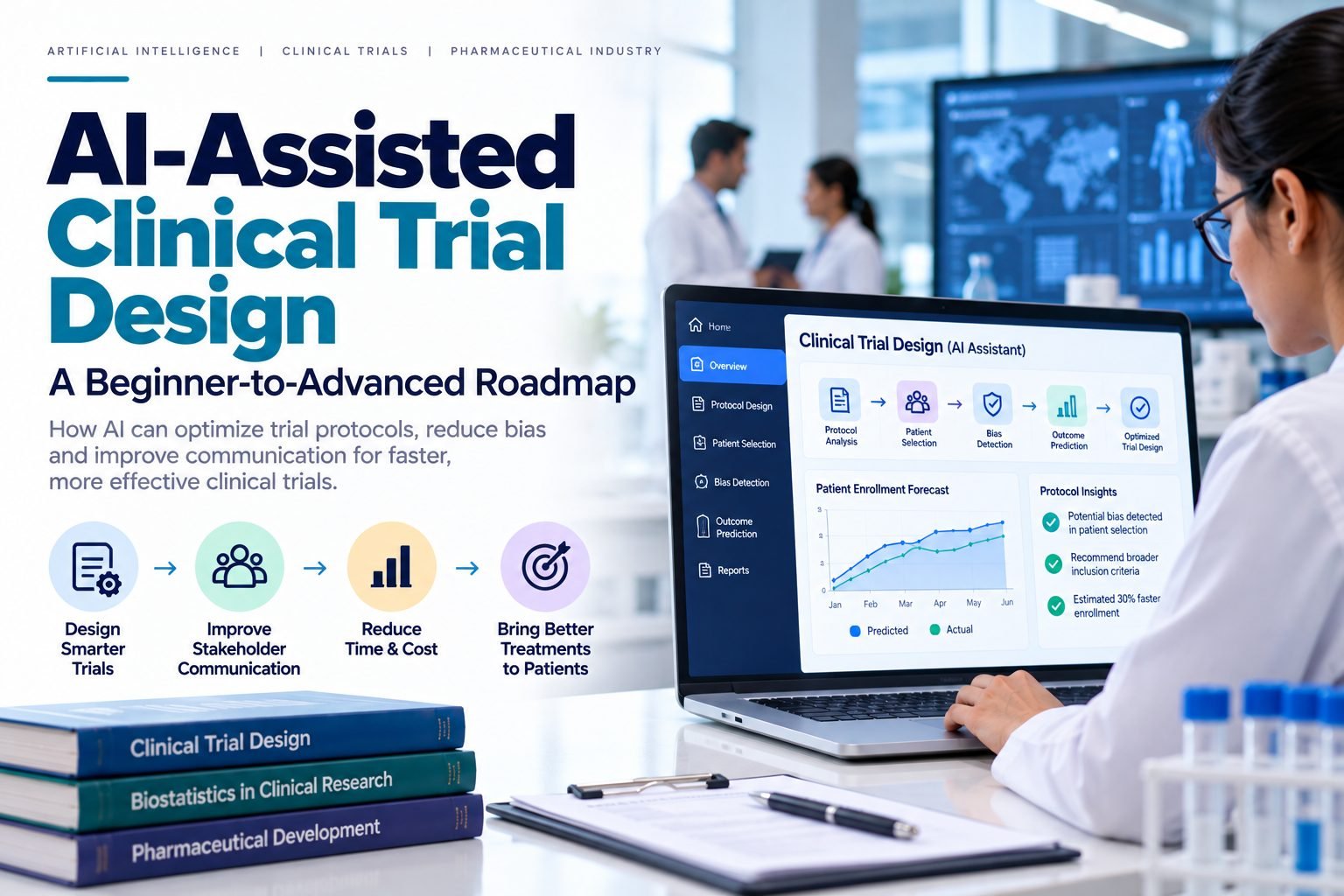
The pharmaceutical industry is constantly seeking ways to improve the efficiency and effectiveness of clinical trials. One approach that has gained significant attention in recent years is the use of artificial intelligence (AI) to assist in clinical trial design. AI can help optimize trial protocols, identify potential biases, and improve communication among stakeholders. In this article, we will provide a beginner-to-advanced roadmap for implementing AI-assisted clinical trial design, with a focus on communication.
1. Introduction to AI-Assisted Clinical Trial Design
AI-assisted clinical trial design involves using machine learning algorithms and natural language processing to analyze and optimize clinical trial protocols. This can include identifying potential biases in patient selection, optimizing treatment regimens, and predicting patient outcomes. For example, a pharmaceutical company used AI to analyze data from a previous clinical trial and identified a potential bias in patient selection. They were able to adjust the protocol for the next trial to ensure a more diverse patient population.
2. Importance of Communication in AI-Assisted Clinical Trial Design
Effective communication is critical in AI-assisted clinical trial design. All stakeholders, including clinicians, researchers, and patients, must be able to understand and contribute to the design process. AI can facilitate communication by providing clear and concise summaries of complex data, identifying potential issues, and suggesting alternative approaches. For instance, a clinical trial manager used AI to generate a report on patient enrollment, which helped identify a bottleneck in the process and allowed for prompt adjustments.
3. AI Tools for Clinical Trial Design
There are several AI tools available for clinical trial design, including machine learning algorithms, natural language processing, and data visualization software. These tools can help analyze large datasets, identify patterns, and predict outcomes. For example, a research team used a machine learning algorithm to analyze data from a clinical trial and identified a correlation between a specific biomarker and treatment response.
4. Implementation of AI-Assisted Clinical Trial Design
Implementing AI-assisted clinical trial design requires a multidisciplinary approach, involving clinicians, researchers, data scientists, and IT professionals. The first step is to identify the specific challenges and opportunities for AI in the clinical trial design process. Next, the team must develop a clear plan for data collection, analysis, and interpretation. Finally, the results must be communicated effectively to all stakeholders. For instance, a pharmaceutical company established a cross-functional team to implement AI-assisted clinical trial design, which resulted in a 30% reduction in trial duration and a 25% reduction in costs.
5. Which One to Try First - A Decision Guide
With so many AI tools and approaches available, it can be challenging to decide which one to try first. The decision should be based on the specific needs and goals of the clinical trial. Consider the type of data available, the complexity of the trial design, and the resources required for implementation. For example, a small biotech company may start with a simple data visualization tool to analyze patient enrollment data, while a large pharmaceutical company may invest in a more comprehensive machine learning platform.
Conclusion
In conclusion, AI-assisted clinical trial design has the potential to revolutionize the pharmaceutical industry by improving efficiency, effectiveness, and communication. By following this beginner-to-advanced roadmap, pharmaceutical companies and researchers can harness the power of AI to optimize clinical trial design and ultimately bring new treatments to patients faster and more efficiently.
Frequently Asked Questions
- Q: What is the primary benefit of using AI in clinical trial design? A: The primary benefit is improved efficiency and effectiveness in identifying potential biases and optimizing trial protocols.
- Q: What type of data is required for AI-assisted clinical trial design? A: The type of data required includes patient demographics, medical history, treatment outcomes, and other relevant clinical data.
- Q: How can AI improve communication among stakeholders in clinical trials? A: AI can provide clear and concise summaries of complex data, identify potential issues, and suggest alternative approaches, facilitating communication among clinicians, researchers, and patients.
- Q: What are the potential challenges in implementing AI-assisted clinical trial design? A: The potential challenges include data quality issues, lack of standardization, and regulatory hurdles.
- Q: How can pharmaceutical companies get started with AI-assisted clinical trial design? A: Pharmaceutical companies can start by identifying specific challenges and opportunities for AI in the clinical trial design process and developing a clear plan for data collection, analysis, and interpretation.
Common Misconceptions
There are several common misconceptions about AI-assisted clinical trial design, including the idea that AI will replace human researchers and clinicians. In reality, AI is designed to augment and support human decision-making, not replace it. Another misconception is that AI requires large amounts of high-quality data, which can be a challenge in clinical trials. However, AI can also be used to identify and address data quality issues.
Practical Application
To apply AI-assisted clinical trial design in practice, pharmaceutical companies and researchers should follow these concrete steps:
- Identify specific challenges and opportunities for AI in the clinical trial design process.
- Develop a clear plan for data collection, analysis, and interpretation.
- Establish a cross-functional team to implement AI-assisted clinical trial design.
- Select the most suitable AI tools and approaches based on the specific needs and goals of the clinical trial.
- Communicate effectively with all stakeholders, including clinicians, researchers, and patients.